Courses
Learn about the courses offered through the Geography program.

Learn about the courses offered through the Geography program.

The Geography program at BC offers a wide range of course offerings covering both human and physical geography. We are also one of only a few community and technical colleges statewide that offer an Introduction to GIS course. The geography program at BC aims to expand its GIS offerings in the near future in order to best serve the community in the high demand field.
Students can also explore the relationship between humans and the environment as related to the climate emergency in Geography of Weather and Climate Change or analyze and interpret demographic, economic, political, social, and resource distribution patterns in the contemporary world in World Regional Geography. Students can also explore the spatial concepts, political boundaries, and implications on world affairs in Geography of World Affairs or explore humankind’s influence on the environment and the environment’s impact on humankind in Introduction to Geography. Whatever your interest may be in the field of geography, the Geography Program at Bellevue College offers a course that will meet and exceed your expectations.
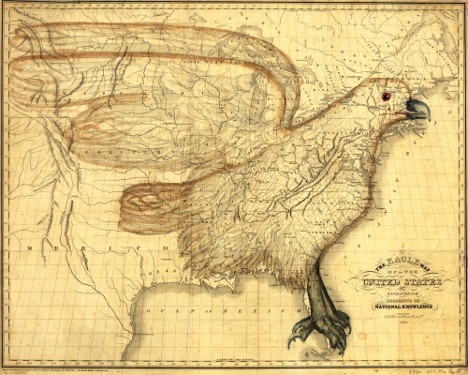
The maps we use shape the way we think about the world. Course explores the history and influence of maps and mapmakers, from the ancient world to the high-tech images of today. Basic computer literacy recommended.
No prerequisite required!
With 14,000 active job postings on Indeed.com and an average nationwide salary of almost $80,000, GIS is an incredibly in-demand field with applications beyond becoming a GIS specialist, in careers as a healthcare statistician, forester, or in the military. Bellevue College is one of only a few community and technical colleges in the state of Washington to offer an intro to GIS course and will be introduced to the industry standard software used by GIS analysts worldwide.
In the course, students will gain an understanding of ways in which data can be mapped and manipulated to present a cartographic story and how cartographic visualizations have and continue to shape society and cultural understandings of space and place through the making and unmaking of property, territory, boundaries, location and ideas of ownership, kinship, and our spatial imaginations. Students will be introduced to GIS and geospatial technologies and utilize ESRI ArcGIS software to develop a final project.

Surveys the concepts and methods of geography by examining humankind’s influence on the environment and the environment’s impact on humankind. Topics include patterns and processes of world climates, culture, population, urbanization, economic activities, and resources.
Studies world geographical relationships. Students analyze and interpret demographic, economic, political, social, and resource distribution patterns in the contemporary world, as well as the factors leading to these regional distributions and the interrelationships among them. Please see quarterly schedule for region of study.
Offers a geographical perspective on contemporary world problems. Students investigate economic, demographic, social, political, cultural, and environmental issues, with emphasis on interrelationships, patterns, processes, and potential solutions. Same as INTST 105. Either GEOG 105 or INTST 105 can be taken for credit but not both.
Provides the background needed to be knowledgeable about the inherent dangers in living with nature as evidenced by actual catastrophes or disasters. Primary focus is on physical processes such as earthquakes; severe storms; and flash flooding that often occur without much warning and longer-term potential hazards such as global warming that may have even greater consequences. Also, current advances in hazards research and applied mitigation techniques will be addressed. This course fulfills a natural science course requirement at BC.
Globalization considers the dynamic processes and consequences of human contact over time that cross traditional economic, cultural and geographic boundaries. The course examines the ever increasing flows of goods, people, ideas, capital and services and the subsequent challenges that have emerged for humankind. Same as INTST 123. Either GEOG 123 or INTST 123 may be taken for credit, but not both.
Explores the relationship between humankind and the physical environment. Based on a series of case studies ranging from the streets of Havana to the soccer stadiums of Europe and the cultural adaptations of the Inuit as they adjust to the physical challenges of their homeland.
Investigates the dynamic patterns and processes of weather, climates, vegetation, and soils. Attention is given to the human significance of different natural, as well as human-altered environments. Fulfills natural science course requirement at BC.
Presents elementary geographical concepts as they apply to the Pacific Northwest region. Students become familiar with geomorphological and climatological processes and their relationship to settlement, population, and economic patterns.
The maps we use shape the way we think about the world. Course explores the history and influence of maps and mapmakers, from the ancient world to the high-tech images of today. Basic computer literacy recommended.