

Bellevue College is partnering with My Emissions to expand climate change awareness on campus.
Provide Feedback on Carbon Labels ›
What is Carbon Labeling?
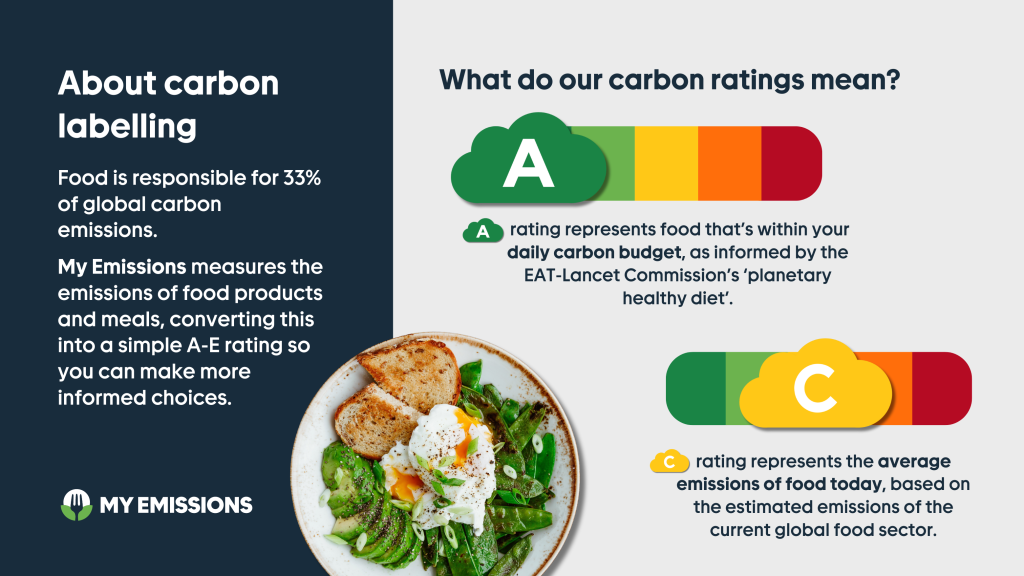
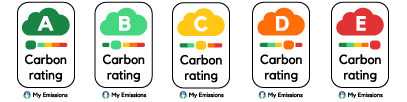
Much like a nutrition label, a carbon label helps people make informed decisions about what to eat. Carbon labels draw attention to greenhouse gas emissions created in the production of a food. As it turns out, there is a gulf of difference between the carbon footprint of eating a beef hamburger versus chicken strips or a plant-based alternative.
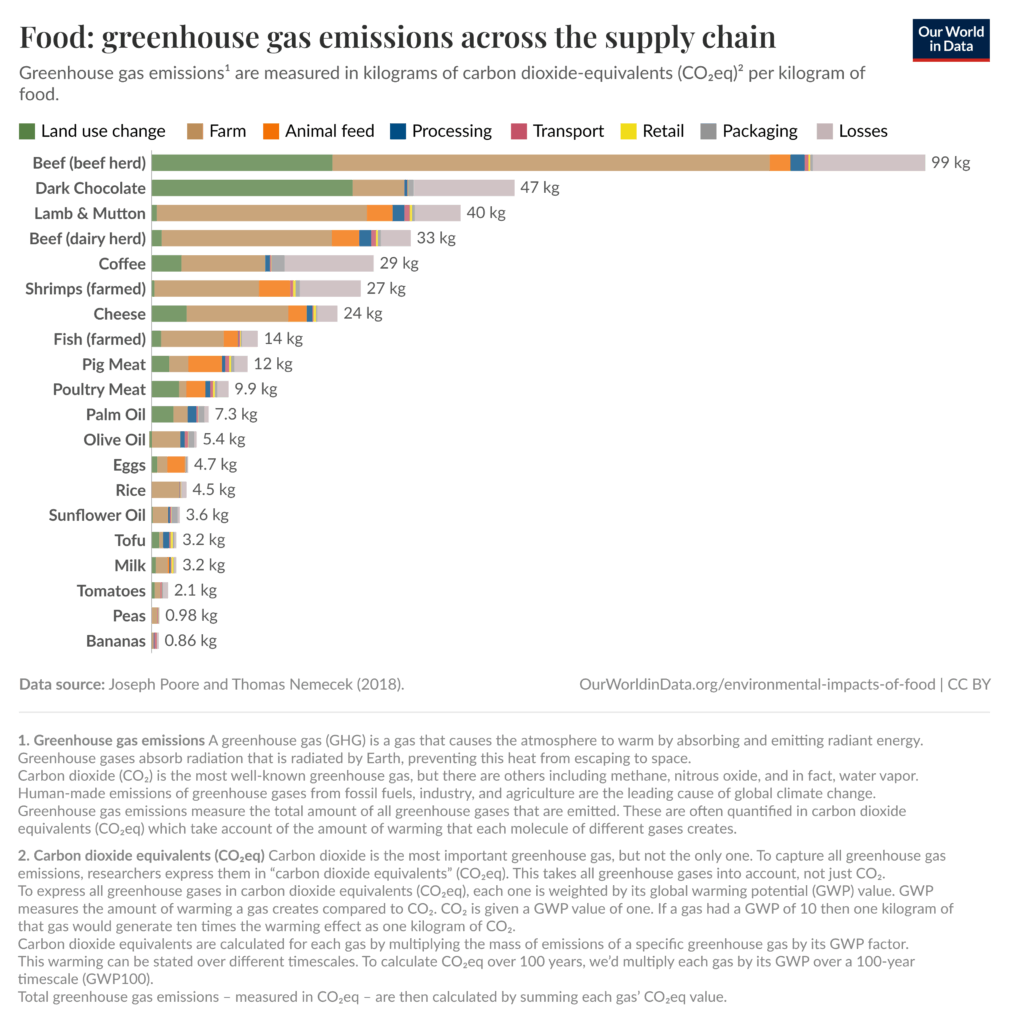
Reading the Labels
Each menu item is ranked on a scale from A to E. Greener labels (A and B) have a smaller carbon footprint and are more sustainable, whereas red labels (D and E) are worse offenders of carbon emissions.
Data
Pilot Program
To start, the Office of Sustainability is working on labeling the Brutus on the Go food truck menu for Fall 2025. In the future, the goal is to expand these labels across campus to all food service locations.
Where does the data come from?
My Emissions, a company which has worked with other colleges and universities for similar programs, sources data on the farming, processing, packaging, and transport of different foods. This data, while not specific to a particular supplier, is averaged over the United States and useful for relative comparisons between types of food.
Won’t this just cause people guilt?
Carbon labeling isn’t about causing guilt or shame; it’s about providing information. For people who want to make environmentally conscious choices, these labels provide an extra hint that makes it easier to pick the sustainable option. At Bellevue College, there are plenty of low-carbon food options that are both affordable and accessible. In many cases, these options are also healthier, making it easier for students to make choices that are good for themselves and the planet.
About this Project
This project was initiated by a former Bellevue College student and Sustainability Outreach Coordinator, Nick Frey, in 2025, and is funded by the Student Environmental Sustainability Fund. Original SESF presentation can be found here.
Last Updated September 16, 2026