

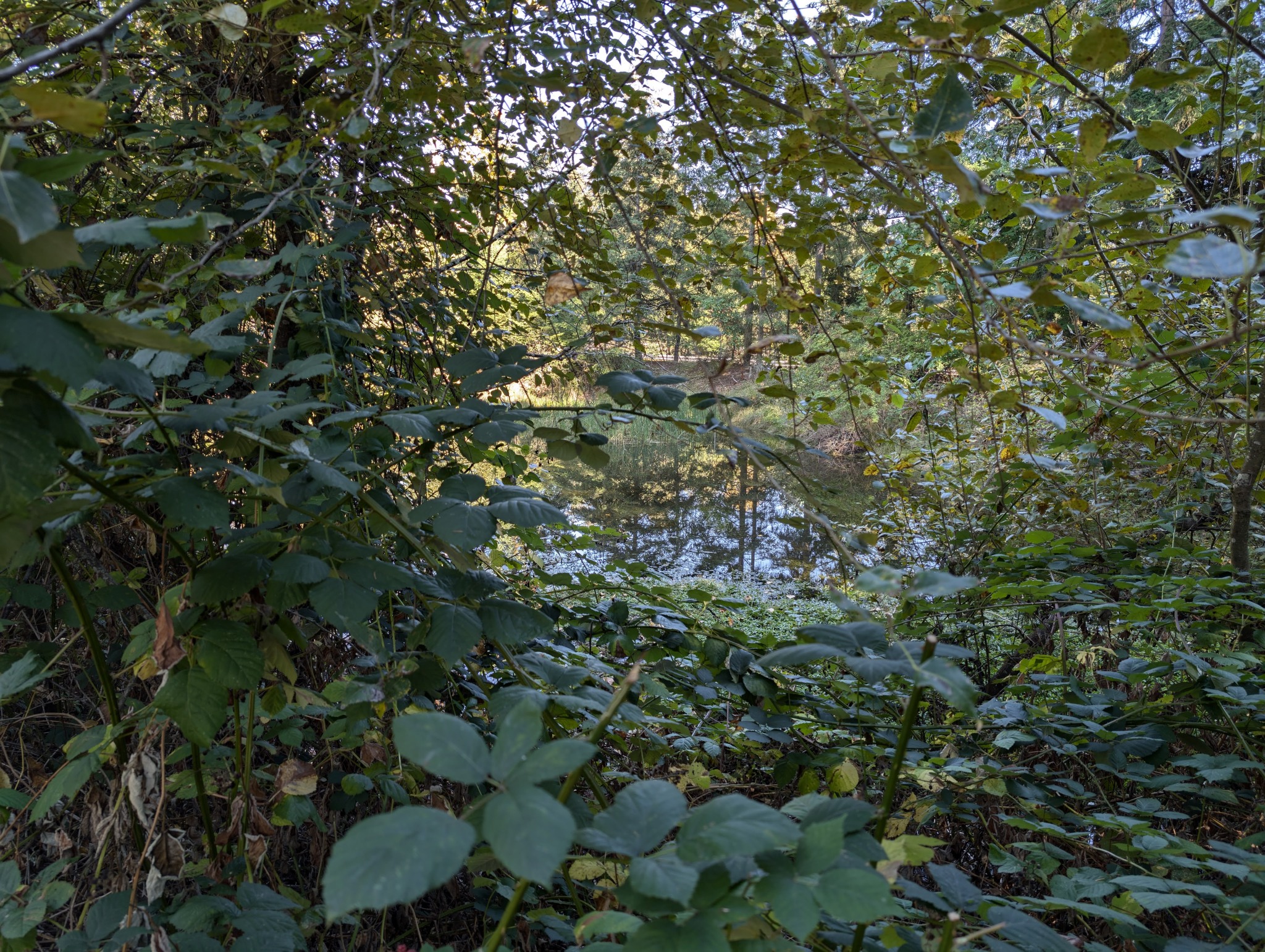
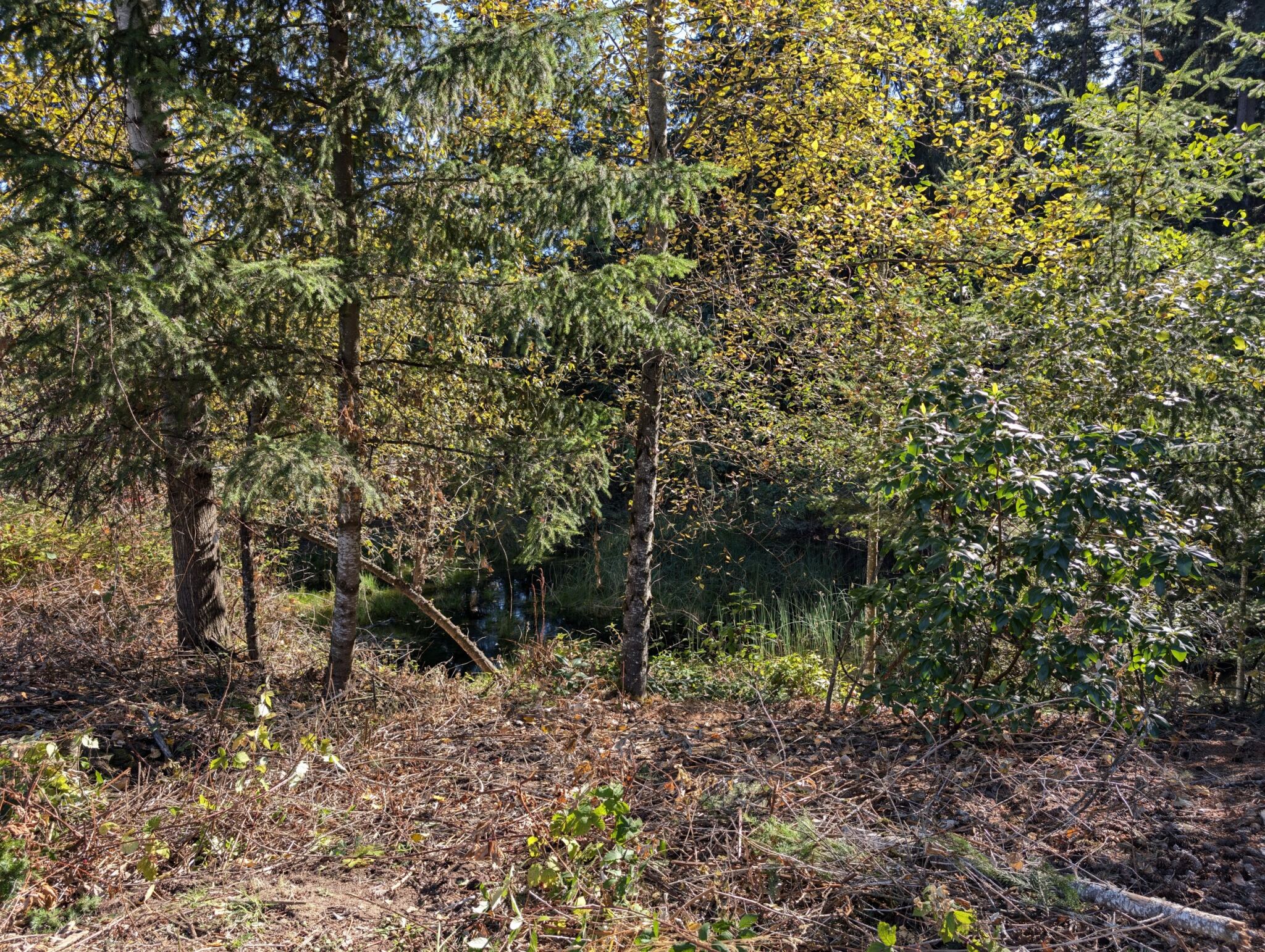
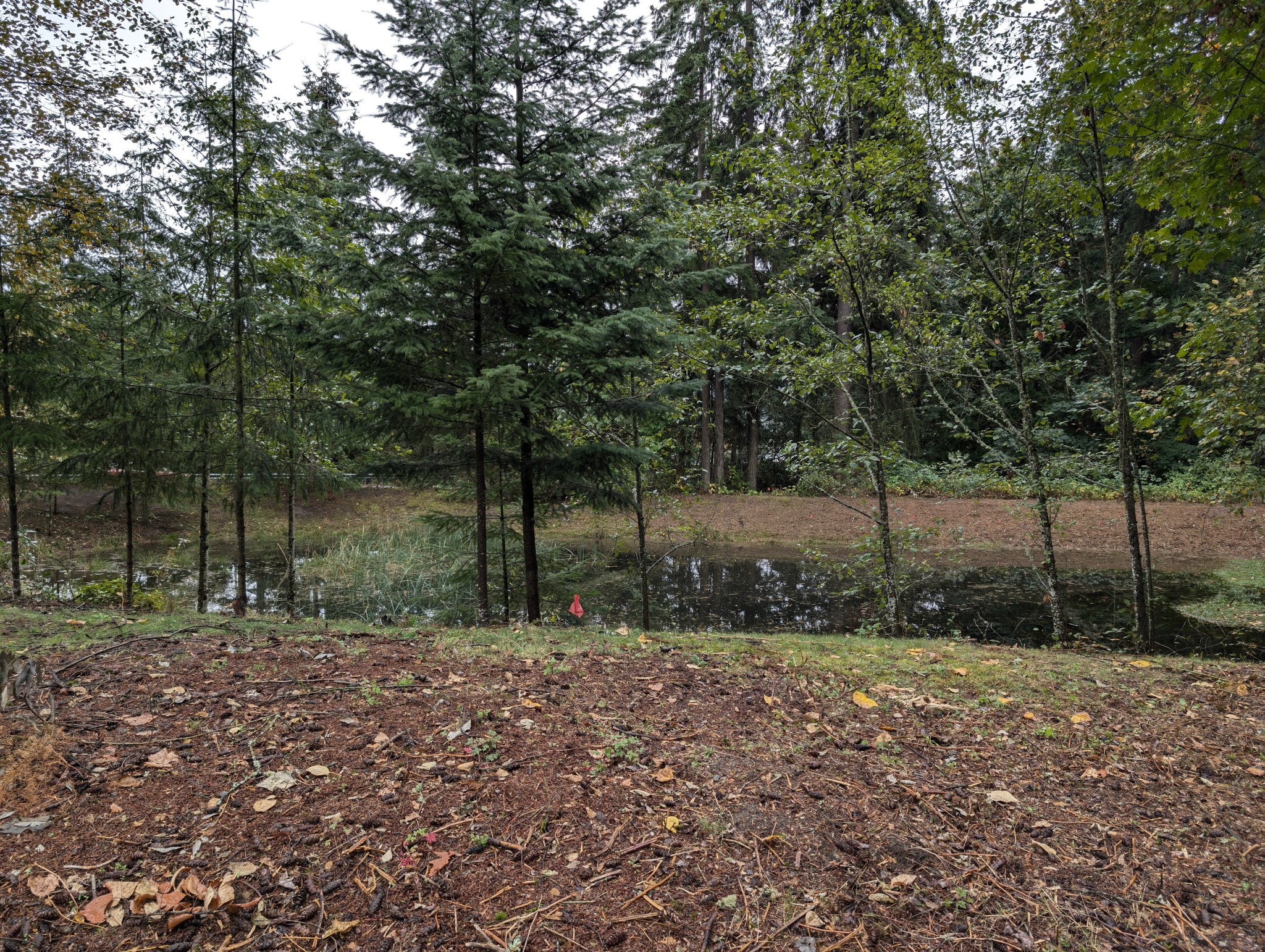
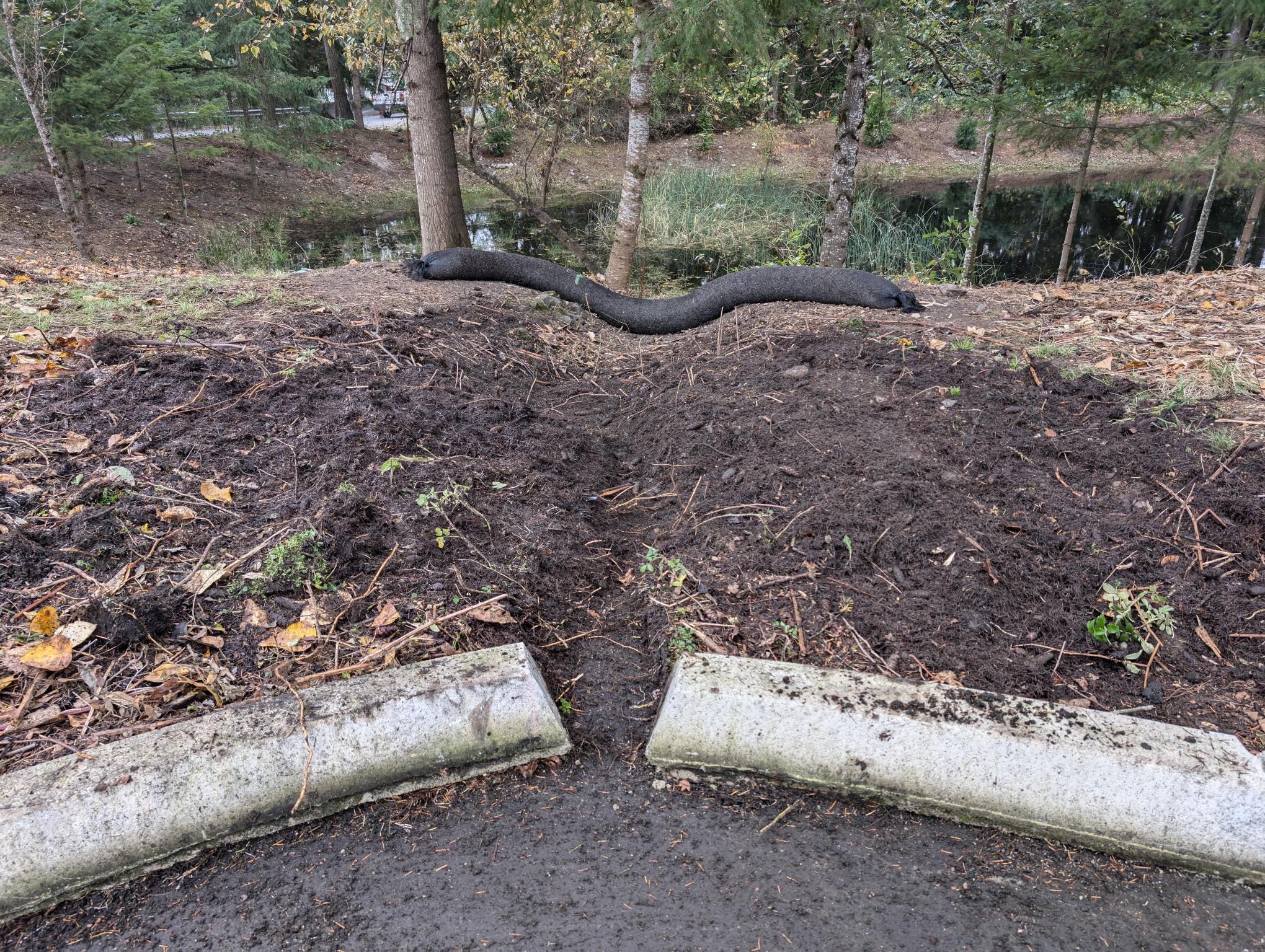
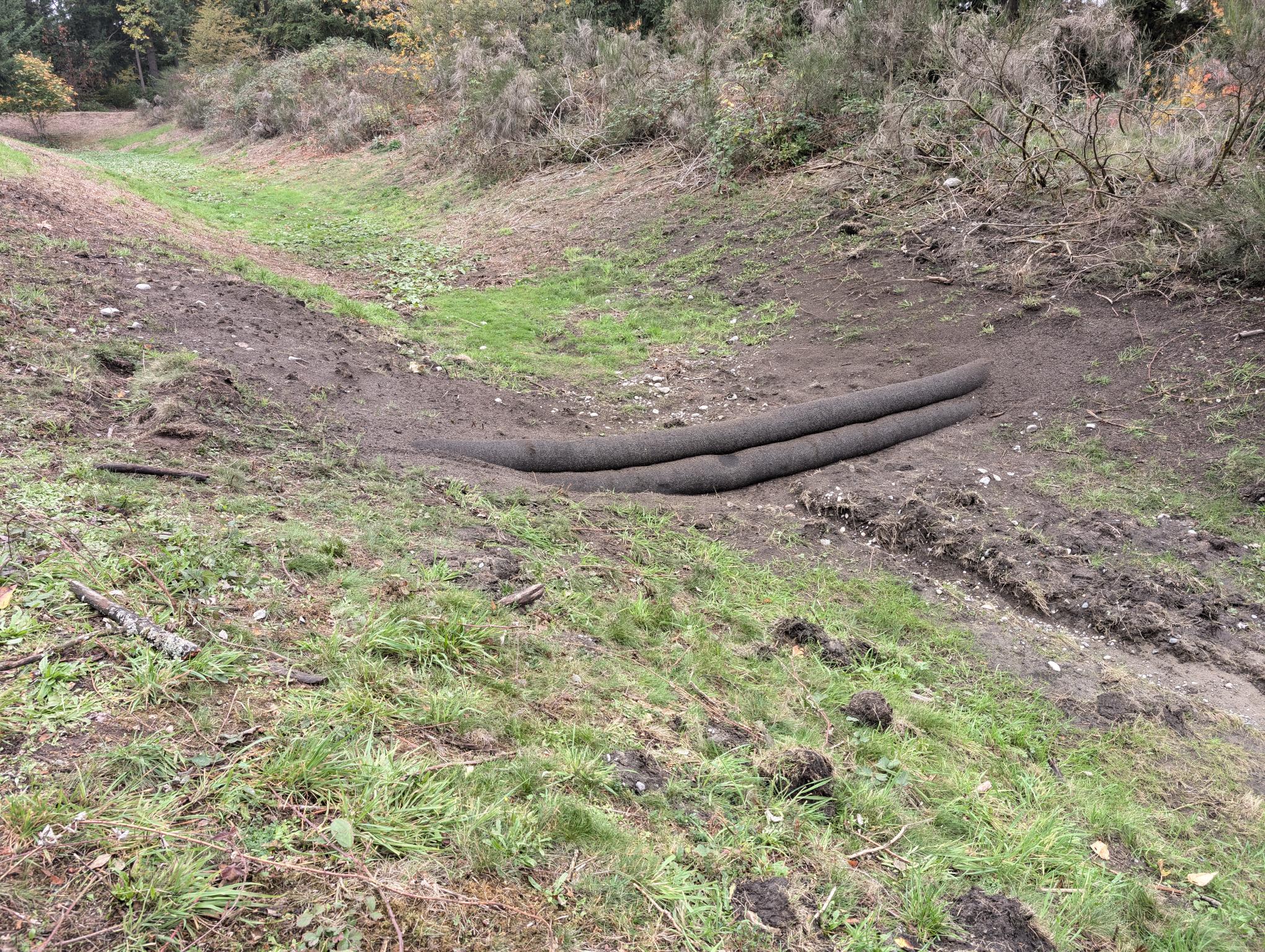
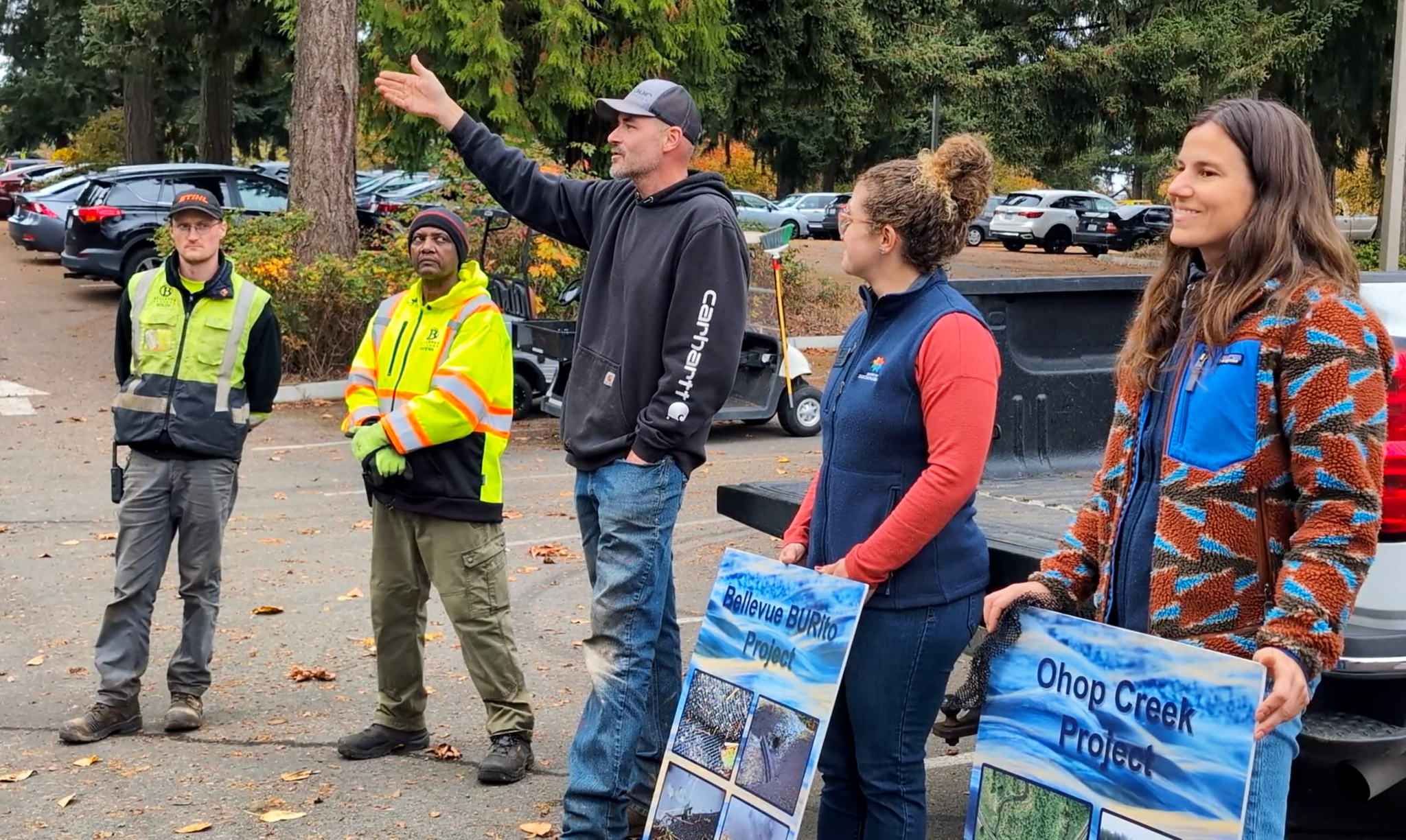
As part of our salmon recovery efforts, Bellevue College is making use of Compost BURritos (Bio-retention Urban Retrofits). In October 2024, four bio-retention urban retrofits were installed in the swale draining into a stormwater detention pond in the southeast corner of Bellevue College campus, east of parking lots 1A, 3A, 3B, and 5. These filtration devices are composed of compost wrapped in a ‘sock’ and secured in place to prevent movement with changing water levels.
The bio-retention devices have been found to reduce heavy metals, environmental contaminants, polycyclic aromatic hydrocarbons (PAHs), and phthalates. In particular, this approach has been found to be effective in reducing dissolved zinc, pentachlorophenol, dimethylphthalate, total phosphorus, nitrates, and 6ppd-quinone (McIntyre, 2021). Bellevue College resides in an area identified as critical to salmon habitat restoration based on ecosystem and watershed health and transportation use (McIntyre report above, p. 26).
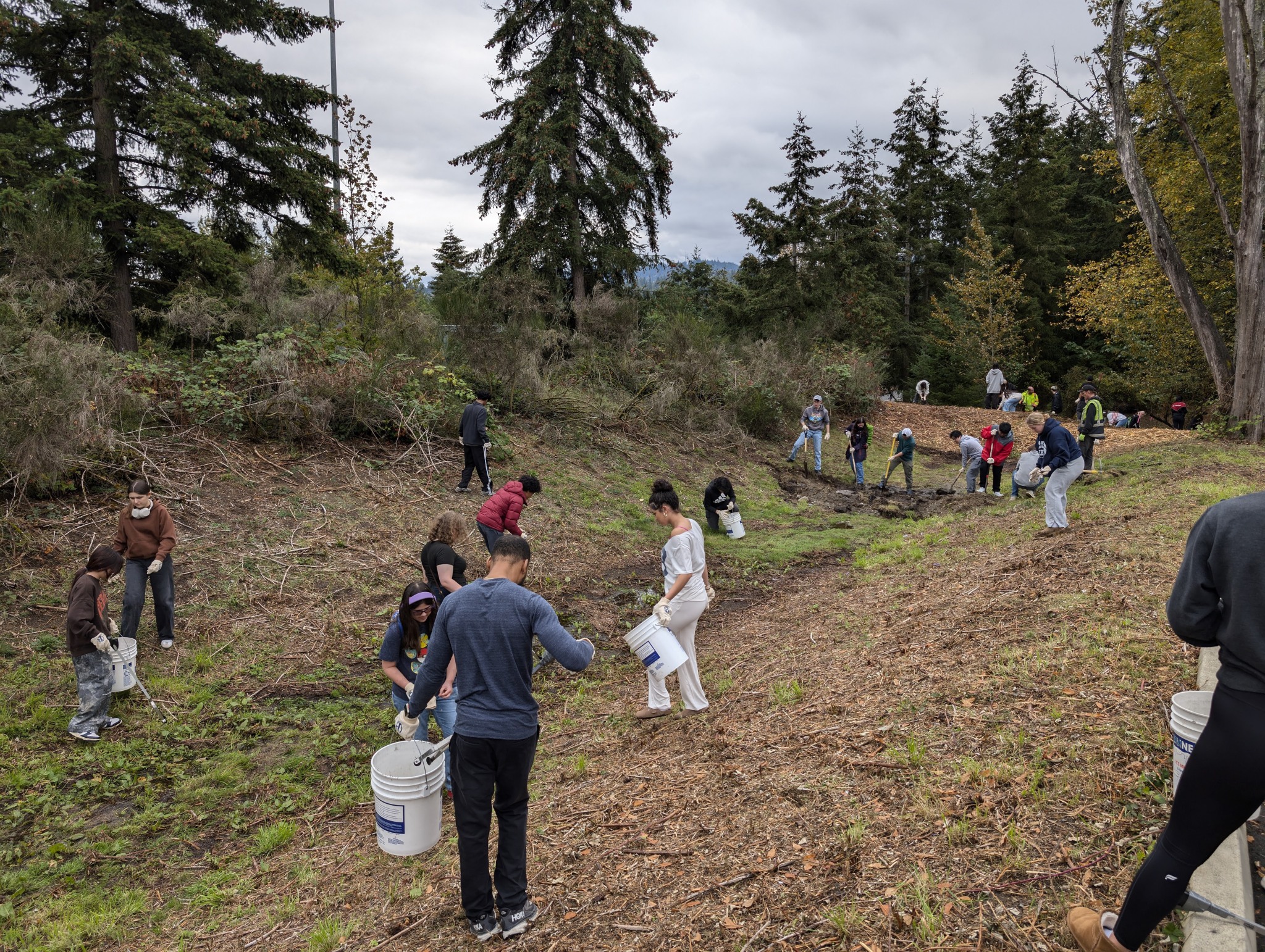
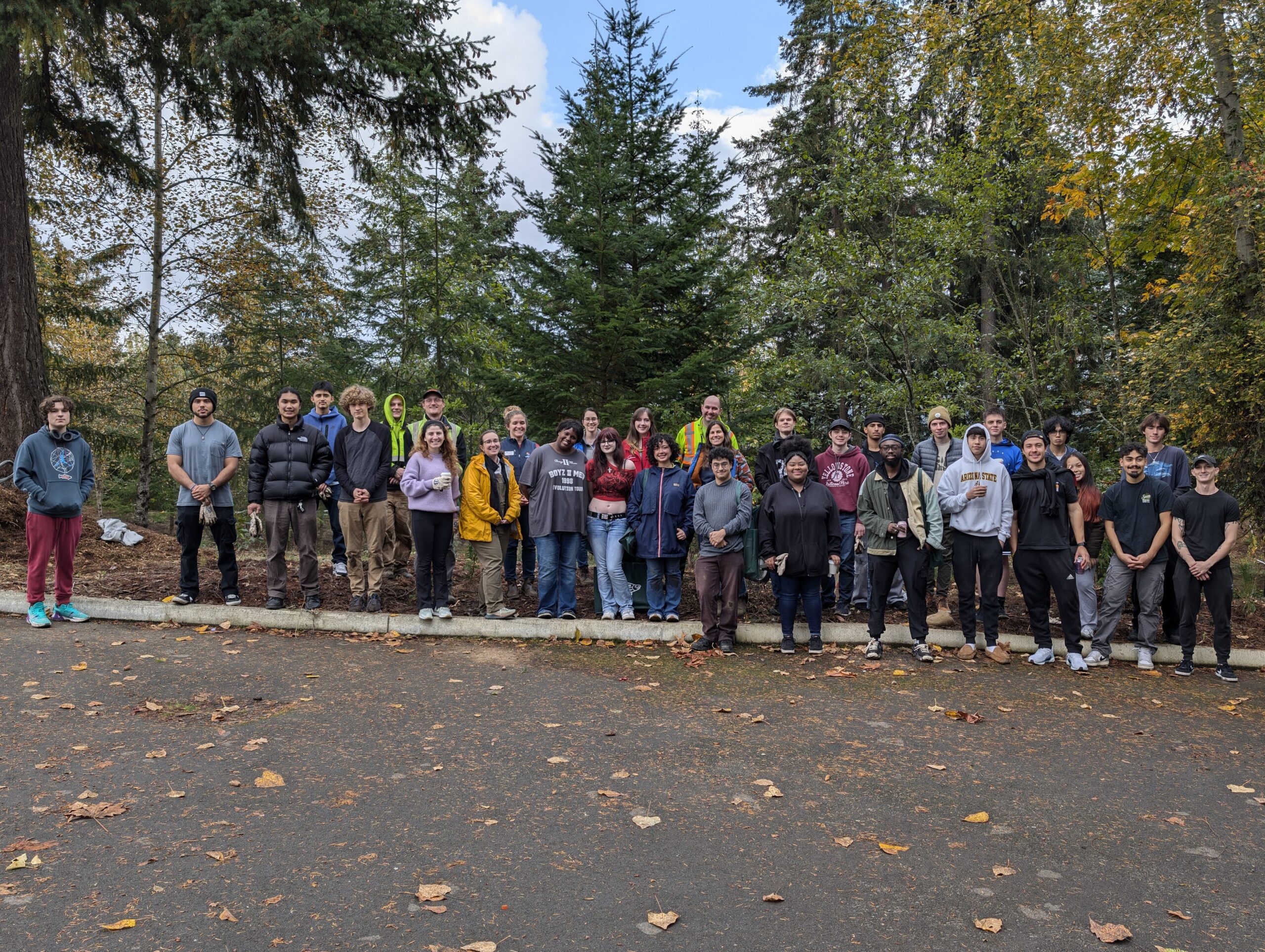
As part of the project, native plants were reintroduced to the area surrounding the swale and pond, providing additional filtration of stormwater. Prior to the project start, Bellevue College Grounds personnel removed invasive plants from the area, and volunteer habitat restoration events enabled the campus community and students to engage with hands-on work in nature.
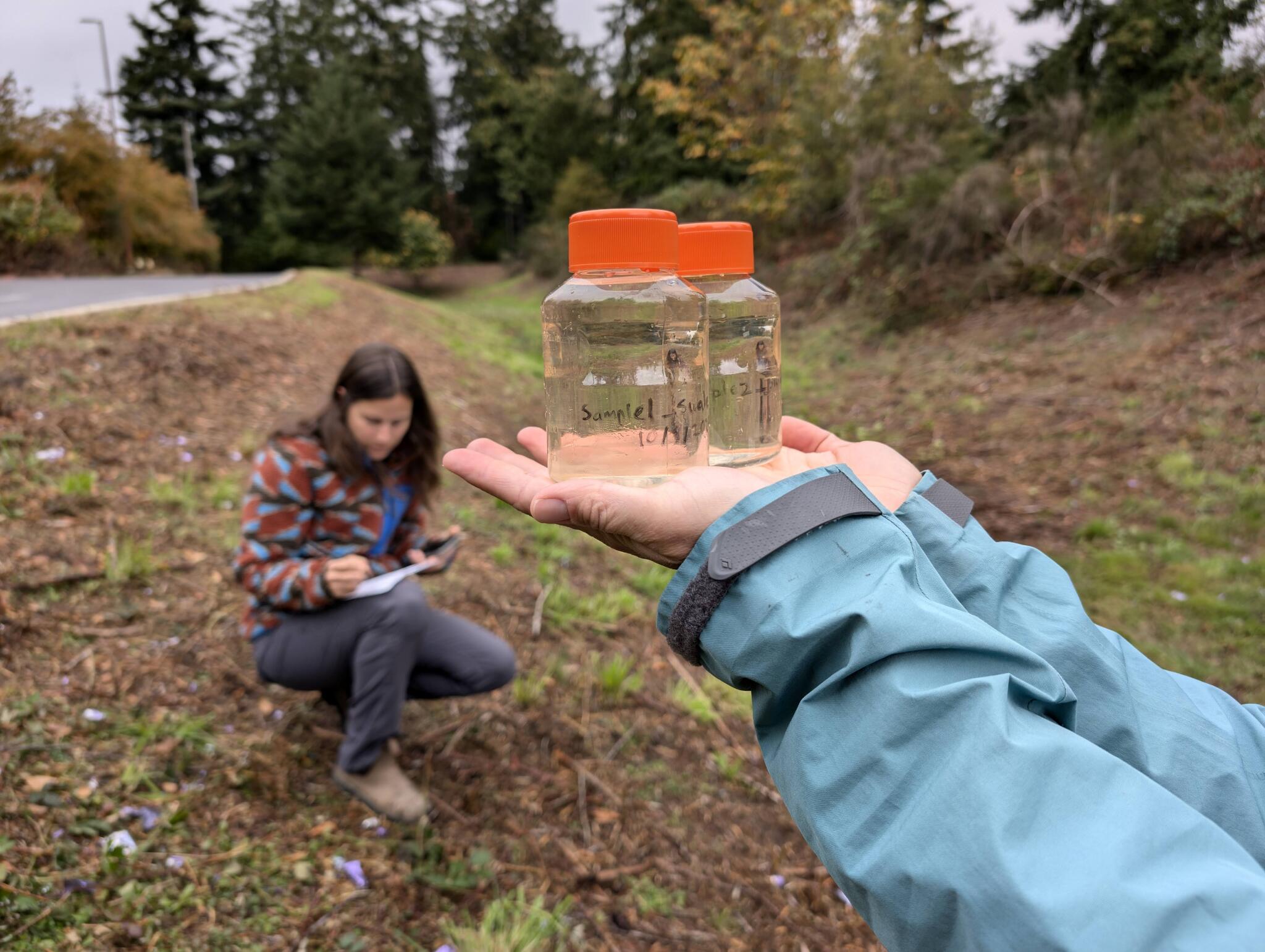
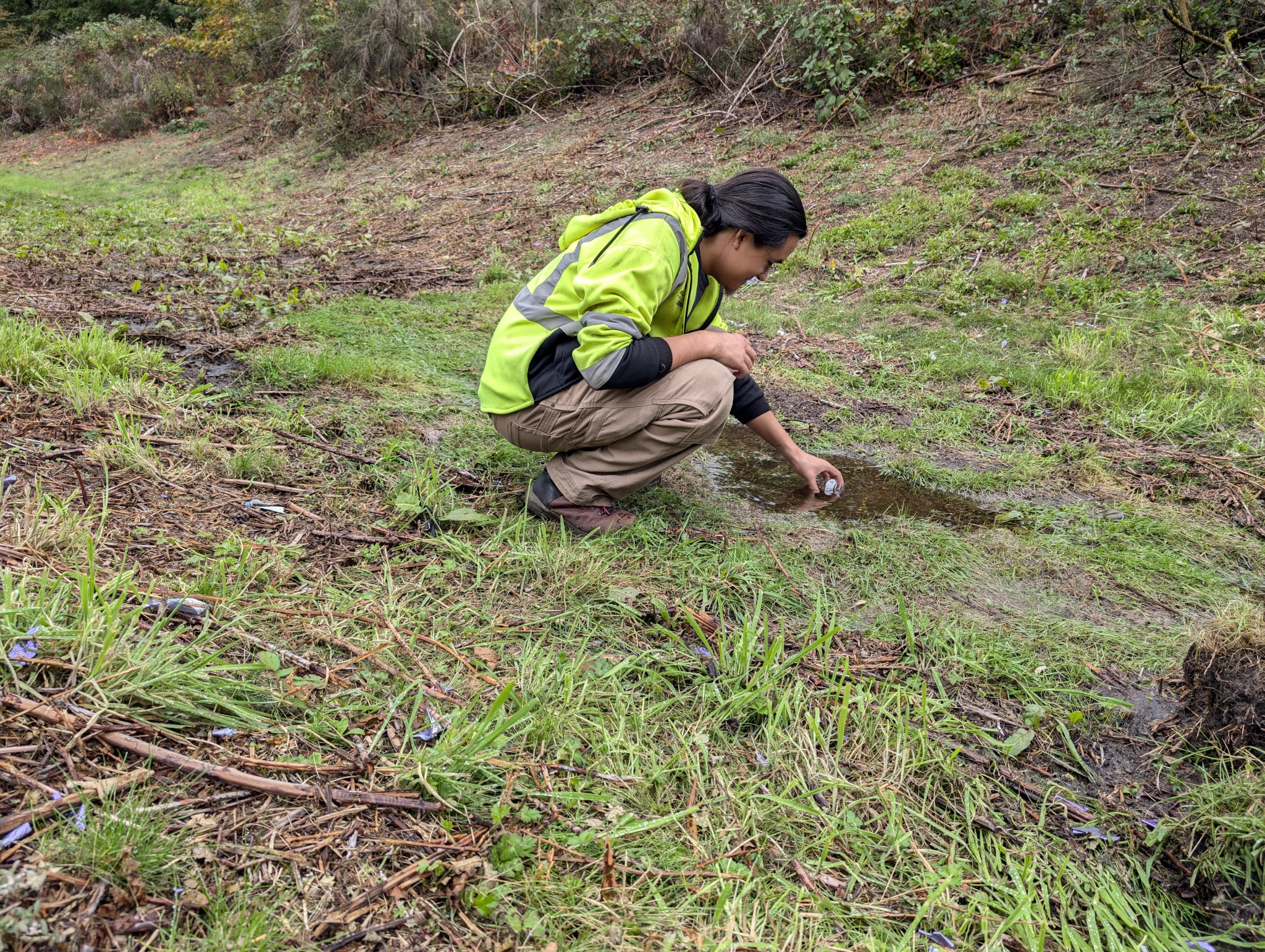
Ongoing is monitoring of toxic levels in stormwater before, during, and after project completion. 6ppd-quinone was discovered to rub off of automotive tires and flow from roads into waterways, poisoning coho salmon. It is the particular chemical of interest in our salmon protection efforts.
BURrito in Action
BEFORE
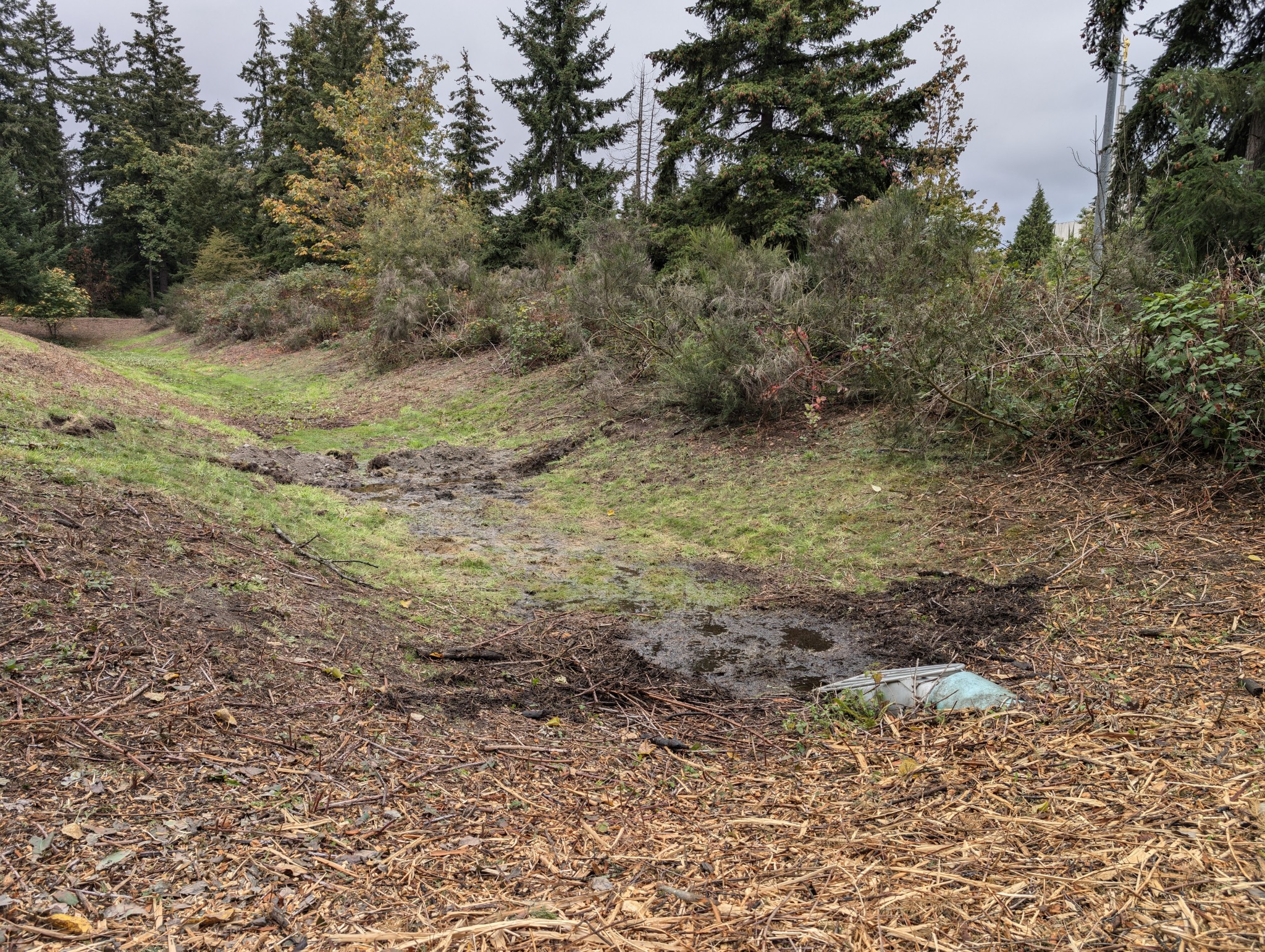
AFTER
More Photos
Last Updated April 20, 2026