Building a Virtual Stage for BC Musicians
David Wikstrom and Karanveer Singh created Stage Visualizer at the Bellevue College XR Lab.

David Wikstrom and Karanveer Singh created Stage Visualizer at the Bellevue College XR Lab.
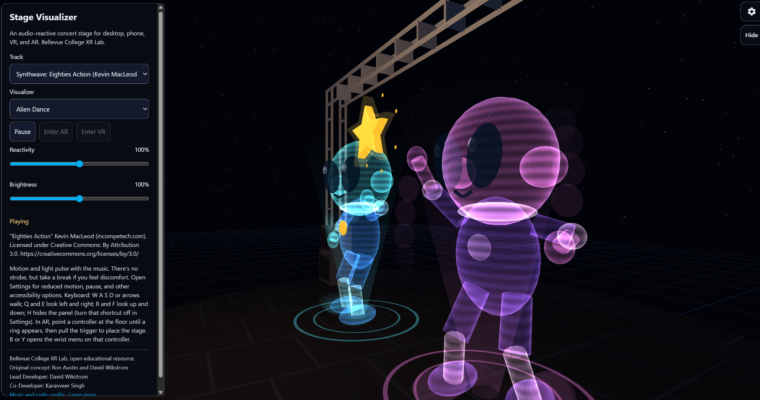
David Wikstrom created Stage Visualizer at the Bellevue College XR Lab. Karanveer Singh’s part was creating animations for David. Early on, Ron Austin, our director, and David talked about doing something with music at the lab. We wanted to work with the music department and give more people a chance to see what their students and faculty do, especially since the department has been hit hard by budget cuts.
They pictured a music teacher sitting down to play a piece, or a whole band taking the stage together. One audience member could watch from a laptop while another could put on a headset and see the same stage in VR. The visuals would follow the performance. If a musician let a note hang, the stage would have room to settle with it.
Karanveer created animations for the stage and helped shape the application’s design. He also contributed to its accessibility features and helped build the software that makes the visuals respond to music. The project uses Three.js to draw the 3D stage and WebXR to let people experience it in AR and VR.
Karanveer used an agentic engineering workflow: he described the behavior he wanted, used advanced AI models to help implement and test it, and reviewed the result in a live preview. That gave him a way to refine specific movements, like the dancers’ backward glide during a moonwalk or the placement of a hand when it catches a star.
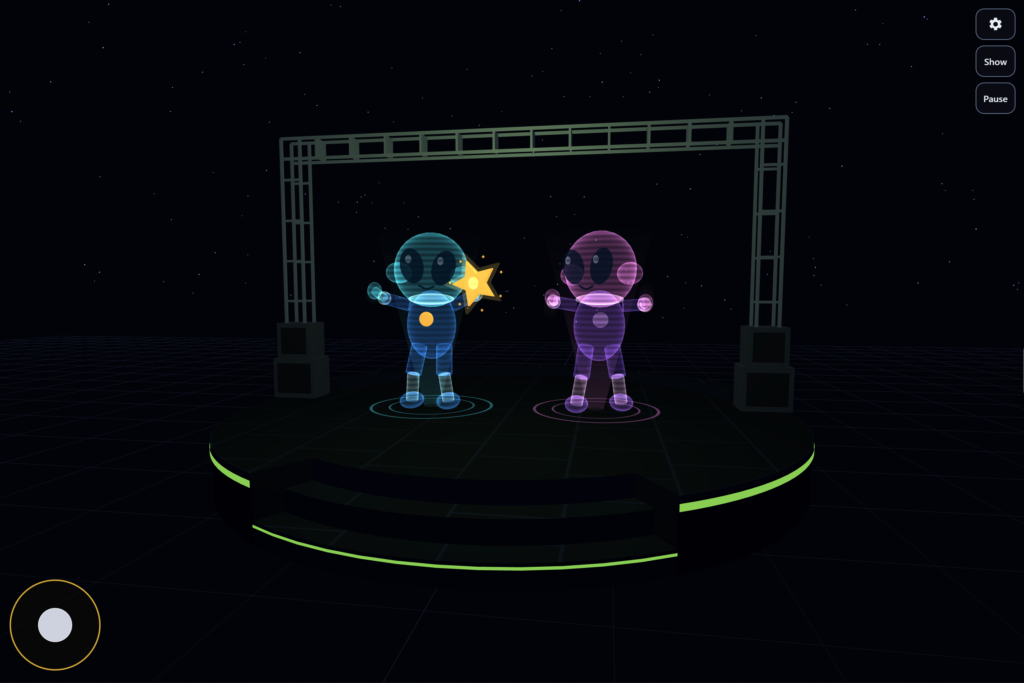
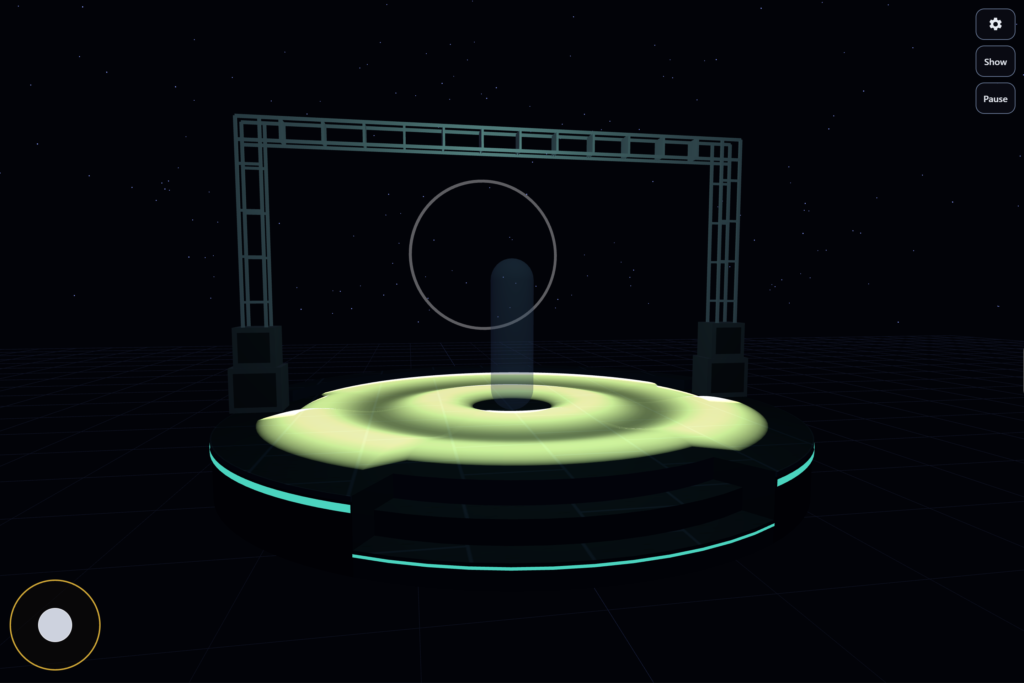
Anyone can try Stage Visualizer in a browser on a computer or phone. With a compatible headset, a viewer can watch in VR or use AR to place the stage on the floor in front of them. Viewers can also soften the lights or turn on reduced motion to keep the camera still. The project page on GitHub has the controls and accessibility settings.
Right now, the lab has a working music visualizer. The next step is for the team to sit down with someone from the music department and choose a piece they want to share. The musician might want the audience listening closely during a quiet passage, or they might want the stage to open up when the whole band comes in. Those are decisions the team and the musicians can make together as they plan that first performance.