Courses
Learn about the courses offered through the Criminal Justice program.

Learn about the courses offered through the Criminal Justice program.

A multidisciplinary approach covering the basic practices involved in forensic science, including crime scene investigations, proper evidence documentation and collection techniques, physical evidence analyses, maintaining the chain of custody, and the presentation of scientifically-based conclusions in court. Previously CJ 207. Recommended: CJ& 101. Fee: $35.00 forensic lab.
Take CJ& 240: Introduction to Forensic Science at Bellevue College!
Ever wondered how investigators:
In CJ& 240, you won’t just read about forensic science—you’ll work with evidence, examine real-world cases, and learn how forensic techniques are used in the criminal justice system.
Whether you’re interested in criminal justice, law enforcement, forensic science, psychology, criminology, or just love true crime, this class gives you a chance to see what happens behind the scenes.
Turn your true-crime curiosity into real forensic skills.
Surveys the criminal justice process from arrest through release. Students examine the relationships and responsibilities of and among police, prosecutors, courts, and probation and parole systems.
Introduces basic concepts, theories, principles and an historical overview of the system as it pertains to the institutional control and supervision of adult offenders. Previously CJ 106. Either CJ 106 or CJ& 105 can be taken for credit, not both. Recommended: CJ& 101 or CJ& 112.
Introduces basic concepts, theories, principles and an historical overview of the criminal process as they relate to the formal and informal adjudication of violent, serious, and chronic juvenile offenders. Previously CJ 109. Either CJ 109 or CJ& 106 can be taken for credit, not both. Recommended: CJ& 101.
Surveys theories and concepts of law pertaining to the criminal justice system. Topics include the Revised Code of Washington and specific state and federal constitutional amendments.
Presents fundamental investigative techniques used within the criminal justice system. Topics include discovery, preservation, and presentation of evidence, methods of obtaining information and developing sources, and functions of a criminal laboratory.
Examines the philosophical, moral, and ethical bases of human behavior from a criminal justice perspective. Students discuss justice, law, and punishment, moral decision-making; and ethical and legal dilemmas in law enforcement. Same as PHIL 248. Either CJ 248 or PHIL 248 may be taken for credit, not both.
Presents organizational structure and concepts of staff and line, chain of command, and hierarchy. Students examine advantages and limitations of organizational models for agencies of varying sizes.
Surveys the steps in collecting evidence, both real and circumstantial, in a criminal case. Students examine the legal processes from investigation through the trial process. Recommended: CJ& 101.
Studies the Fourth, Fifth, Sixth, and Fourteenth Amendments to the U. S. Constitution and their impact on contemporary police practices. Students analyze Supreme Court decisions concerning arrests, searches, seizures, self-incrimination, and post-indictment right to counsel.
Examines the strengths and weaknesses of the police carrying out their mission in a culturally diverse society. Students develop an understanding of the influences of culture, race, ethnicity, sexual orientation, and socioeconomic class on the legal process and within society.
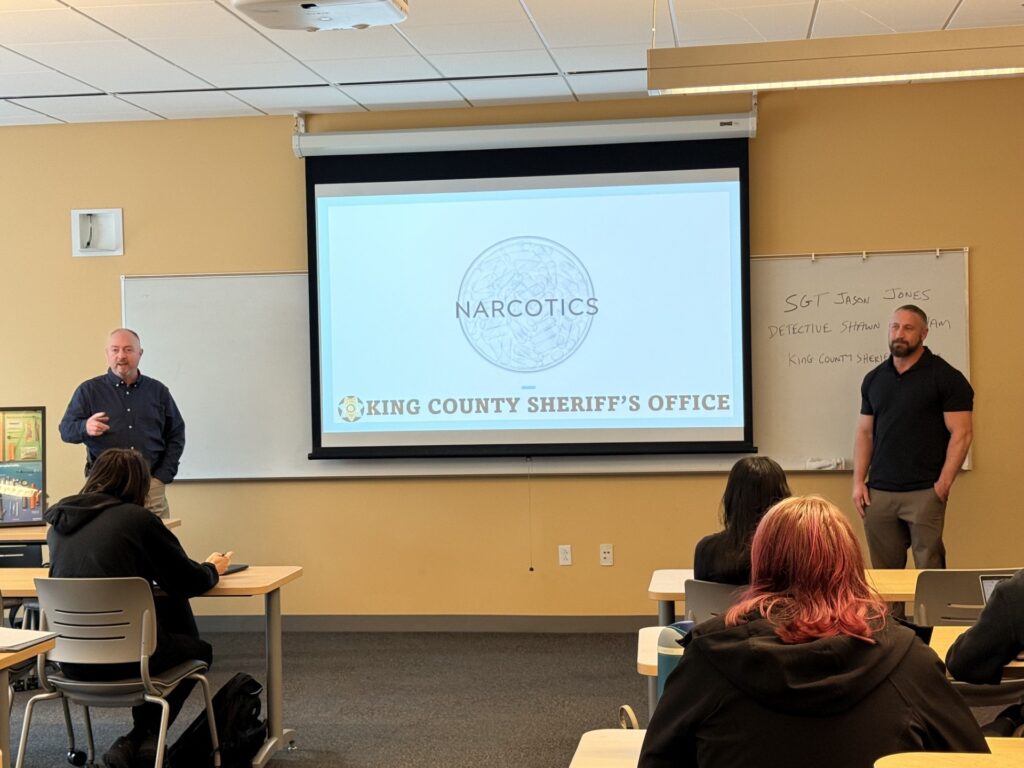
Studies the unique demands that alcohol and drug offenses place on the criminal justice system. Students learn how the procedures of investigation, information management, and prosecution differs between alcohol and drug crimes and other criminal offenses.