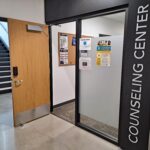
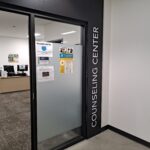
The Bellevue College Counseling Center offers clinical training and supervision to graduate-level students seeking to gain experience providing mental health services in a higher education setting.
Use the drop-down menu below to learn more about our training opportunities.
Bellevue College cannot accept applicants who have been former clients of the BC Counseling Center within the past 5 years.
The 2027 – 2028 MA-level Internship application will open in November.
The 2027 – 2028 doctoral-level Practicum application will open in November.
Are you an equity-minded master’s level student who believes in fostering inclusive and accessible counseling services? Do you want to counsel a diverse student body at an open-enrollment institution? Do you have lived experiences similar to the students we serve? If you answered yes to the questions above, we invite you to apply for the master’s level internship program. The Bellevue College (BC) Counseling Center is seeking a master’s level student who is open to working with college student populations across the spectrum of developmental and mental health issues as well a willingness to provide socially-just mental health services to BIPOC, neurodivergent, and other underrepresented populations.
*Bellevue College cannot accept candidates who require the College to provide clinical liability insurance during the internship.
Applicants enrolled in an accredited university not located within WA State, must:
•Be able to be physically present at the Bellevue College Counseling Center during their internship; and
•Check with their individual programs and State licensing boards to ensure that an internship placement with the Bellevue College Counseling Center meets their requirements.
The BC Counseling Center focuses on individual and group therapy and does not provide family or couples counseling.
Intern Learning Objectives:
- Execute core clinical knowledge and skills in providing culturally-competent and socially-just short- and long-term individual (personal, educational, and career) and group counseling.
- Implement core clinical knowledge and skills in assisting students, including those who are on academic probation, in identifying and resolving problems affecting their educational and personal development by clarifying short- and long-range educational/personal/occupational goals.
- Execute the core skills and knowledge base in assessing and helping clients prepare for, minimize, and resolve crisis situations.
- Develop culturally responsive therapeutic modalities when working with historically underrepresented student populations.
- Create and maintain ethical and professional relationships with all students, clients, supervisor, and colleagues and staff at the Center and on campus.
- Identify and connect clients with appropriate campus and community resources and services.
- Generate ideas for outreach activities targeting different student populations, plan outreach projects, and conduct outreach activities appropriate for the targeted populations.
- Adhere to the Center’s standards for record keeping and utilizing feedback obtained from developmentally supportive clinical supervision for personal and professional growth.
Site Objectives:
- Support interns in applying what they are learning in an ethical and culturally competent manner through their engagement in developmentally supportive clinical supervision and other learning activities.
- Foster interns’ confidence as a mental health professionals.
- Support interns in developing their identities as mental health providers in a college setting.
- Provide mentorship for the next generation of counselors.
Internship Schedule and Expectations:
The internship officially begins in the first week of September with onboarding activities, ahead of the fall quarter which starts in mid to late September. Interns may begin earlier in August if required by their academic programs.
Interns are generally expected to work a minimum of three days per week and a minimum of 6 hours per day. Daily shifts typically start between 9 and 10 AM and conclude between 3 and 5 PM.
Essential Functions/Job Duties:
An intern at the Counseling Center performs duties and responsibilities under the general direction of the Site Supervisor. The intern will receive at least one-hour of weekly individual clinical supervision with a licensed mental health counselor and/or licensed psychologist. The intern also has the opportunity to participate in the Counseling Center’s weekly staff meetings and case consultations.
Below are the typical duties of an intern:
- Provide culturally-competent and socially-just short- and long-term individual (personal, educational, and career) and group counseling.
- Assist students with identifying and resolving problems affecting their educational and personal development by clarifying short- and long-range educational/personal/occupational goals.
- Provide crisis counseling and assessment for students in emotional distress.
- Use culturally responsive therapeutic modalities when working with historically underrepresented student populations.
- Refer students to appropriate campus and community resources and services.
- Support students on academic probation and other student populations by providing appropriate interventions to help them achieve academic success.
- Provide developmental advising practices to help students set educational goals.
- Perform related duties as required.
Other Potential Functions/Job Duties:
Interns may also have the opportunity to do the following:
- Create and deliver outreach activities/events, workshops, and other prevention services to the campus community.
- Possibility of assisting in providing neuroaffirming clinical interviews and psychological assessment.
Minimum Qualifications:
- Enrollment in an accredited university in Counseling; Counseling Psychology; Clinical Psychology; Educational Psychology; Educational Counseling; Social Work, or related field.
- Applicants enrolled in an accredited university not located within WA State, must:
- Be able to be physically present at the Bellevue College Counseling Center during their internship; and
- Check with their individual programs and State licensing boards to ensure that an internship placement with the Bellevue College Counseling Center meets their requirements.
- Applicants enrolled in an accredited university not located within WA State, must:
- Completion of at least 3 credits of each of the following or related courses:
- Professional and Ethical Issues in Counseling/Psychotherapy
- Theories of Counseling/Psychotherapy
- Diagnosis and Assessment/Psychopathology
- Counseling Lab/Skills (1 -3 credits)
- Willing to learn to provide culturally responsive personal, academic, and career counseling, especially to individuals with diverse backgrounds.
- Openness to receive and integrate feedback.
- Exceptional interpersonal communication skills and an ability to work effectively and collaboratively with diverse teams and diverse populations.
- Willingness to commit to a 9–12-month experience, with an end date of no earlier than late June, as well as working a minimum of 18 hours per week in-person.
Preferred Qualifications:
- Interest in pursuing a career in higher education.
- Experience or familiarity with short-term counseling models (e.g., CBT, ACT, Solution Focused Therapy, etc.)
- Experience working with Black, Latinx, or neurodivergent populations.
- Bilingual skills.
Application Directions:
Please include All of the following materials:
- Complete the online application and include the following:
- An updated resume or curriculum vitae
- A cover letter (1-page maximum) that addresses the following:
- What interests you in an internship at Bellevue College’s Counseling Center;
- How do you meet the minimum and preferred qualifications;
- What are your professional goals after you graduate; and
- What are your graduate programs’ training requirements (e.g., number of hours; number of months; etc.).
- 3 professional or academic references we may contact that includes their name, phone number, and email address.
For questions, please send an email to the Counseling Center Program Chair, Steven Martel, at: steven.martel@bellevuecollege.edu.
Are you an equity-minded doctoral student who believes in fostering inclusive and accessible counseling services? Do you want to counsel a diverse student body at an open-enrollment institution? Do you have lived experiences similar to the students we serve? If you answered yes to the questions above, we invite you to apply for the doctoral practicum program. The Bellevue College (BC) Counseling Center is seeking a doctoral student who is open to working with college student populations across the spectrum of developmental and mental health issues as well a willingness to provide socially-just mental health services to BIPOC, neurodivergent, and other underrepresented populations.
*Bellevue College cannot accept candidates who require the College to provide clinical liability insurance during the practicum.
Applicants enrolled in an accredited university NOT located within WA State, must:
- Be able to be physically present at the Bellevue College Counseling Center during their practicum; and
- Check with their individual programs and State licensing boards to ensure that a practicum placement with the Bellevue College Counseling Center meets their requirements.
The BC Counseling Center focuses on individual and group therapy and does not provide family or couples counseling.
Practicum Learning Objectives:
- Execute core clinical knowledge and skills in providing culturally-competent and socially-just short- and long-term individual (personal, educational, and career) and group counseling.
- Implement core clinical knowledge and skills in assisting students, including those who are on academic probation, in identifying and resolving problems affecting their educational and personal development by clarifying short- and long-range educational/personal/occupational goals.
- Execute the core skills and knowledge base in assessing and helping clients prepare for, minimize, and resolve crisis situations.
- Develop culturally responsive therapeutic modalities when working with historically underrepresented student populations.
- Create and maintain ethical and professional relationships with all students, clients, supervisor, and colleagues and staff at the Center and on campus.
- Identify and connect clients with appropriate campus and community resources and services.
- Generate ideas for outreach activities targeting different student populations, plan outreach projects, and conduct outreach activities appropriate for the targeted populations.
- Adhere to the Center’s standards for record keeping and utilizing feedback obtained from developmentally supportive clinical supervision for personal and professional growth.
Site Objectives:
- Provide at least one hour of weekly individual supervision.
- Supervision will include:
- Discussion of services provided by the student;
- Selection of service plan for and review of each case;
- Discussion of and instruction in theoretical concepts underlying the work;
- Discussion of the management of professional practice and other administrative or business issues;
- Evaluation of the supervisory process by the student and the supervisor;
- Discussion of coordination of services among the professionals involved in the particular cases;
- Discussion of relevant state laws and rules;
- Discussion of ethical principles applicable to the work;
- Review of standards for providers of psychological services; and
- Discussion of reading materials relevant to cases, ethical issues and the supervisory process
- Support practicum students in applying what they are learning in an ethical and culturally competent manner through their engagement in developmentally supportive clinical supervision and other learning activities.
- Foster practicum students’ confidence as mental health professionals.
- Support practicum students in developing their identities as mental health providers in a college setting.
- Provide mentorship for the next generation of counselors.
- The practicum student may also participate in 1 hour of weekly case consultation as well as 1 hour of weekly group supervision or seminar.
Practicum Schedule and Expectations:
The practicum officially begins in the first week of September with onboarding activities, ahead of the fall quarter which starts in mid to late September. Practicum students may begin earlier in August if required by their academic programs.
Practicum students are generally expected to work a minimum of three days per week and a minimum of 6 hours per day. Daily shifts typically start between 9 and 10 AM and conclude between 3 and 5 PM.
Essential Functions/Job Duties:
A practicum student at the Counseling Center performs duties and responsibilities under the general direction of the Site Supervisor. The practicum student will receive at least one-hour of weekly individual clinical supervision with a licensed mental health counselor and/or licensed psychologist. The practicum student also has the opportunity to participate in the Counseling Center’s weekly staff meetings and case consultations.
Below are the typical duties of a practicum student:
- Provide culturally-competent and socially-just short- and long-term individual (personal, educational, and career) and group counseling.
- Assist students with identifying and resolving problems affecting their educational and personal development by clarifying short- and long-range educational/personal/occupational goals.
- Provide crisis counseling and assessment for students in emotional distress.
- Use culturally responsive therapeutic modalities when working with historically underrepresented student populations.
- Refer students to appropriate campus and community resources and services.
- Support students on academic probation and other student populations by providing appropriate interventions to help them achieve academic success.
- Provide developmental advising practices to help students set educational goals.
- Perform related duties as required.
Other Potential Functions/Job Duties:
Practicum students may also have the opportunity to do the following:
- Create and deliver outreach activities/events, workshops, and other prevention services to the campus community.
- Assist in providing comprehensive, culturally responsive and neuroaffirming clinical interviews and psychological assessments to students with suspected learning disabilities, ADHD, and/or ASD.
Minimum Qualifications:
- Enrollment in an accredited university in Counseling; Counseling Psychology; Clinical Psychology; Educational Psychology; Educational Counseling; Social Work, or related field.
- Applicants enrolled in an accredited university not located within WA State, must:
- Be able to be physically present at the Bellevue College Counseling Center during their practicum; and
- Check with their individual programs and State licensing boards to ensure that a practicum placement with the Bellevue College Counseling Center meets their requirements.
- Applicants enrolled in an accredited university not located within WA State, must:
- Completion of at least 3 credits of each of the following or related courses:
- Professional and Ethical Issues in Counseling/Psychotherapy
- Theories of Counseling/Psychotherapy
- Diagnosis and Assessment/Psychopathology
- Counseling Lab/Skills (1 -3 credits) (if offered)
- Cognitive Assessment (e.g., WAIS-V)
- Objective Assessment (e.g., PAI, MMPI)
- Integrative Assessment
- Willing to learn to provide culturally responsive personal, academic, and career counseling, especially to individuals with diverse backgrounds.
- Openness to receive and integrate feedback.
- Exceptional interpersonal communication skills and an ability to work effectively and collaboratively with diverse teams and diverse populations.
- Willingness to commit to a 9–12-month experience, with an end date of no earlier than late June, as well as working a minimum of 18 hours per week in-person.
Preferred Qualifications:
- Interest in pursuing a career in higher education.
- Experience or familiarity with short-term counseling models (e.g., CBT, ACT, Solution Focused Therapy, etc.)
- Experience working with Black, Latinx, or neurodivergent populations.
- Bilingual skills.
Application Directions:
Please include All of the following materials:
- Complete the online application and include the following:
- An updated resume or curriculum vitae
- A cover letter (1-page maximum) that addresses the following:
- What interests you in a practicum at Bellevue College’s Counseling Center;
- How do you meet the minimum and preferred qualifications;
- What are your professional goals after you graduate; and
- What are your graduate programs’ training requirements (e.g., number of hours; number of months; etc.).
- 3 professional or academic references we may contact that includes their name, phone number, and email address.
For questions, please send an email to the Counseling Center Program Chair, Steven Martel, at: steven.martel@bellevuecollege.edu.
As clinical supervisors, we engage in consistent weekly supervision with our supervisees and operate from a culturally aware and socially just paradigm. During these times, we review and discuss the supervisees’ clinical cases. We also review a selection of video-recorded clinical sessions as well as all clinical notes and provide comments, feedback, and questions regarding these. We also provide regular formal evaluation as dictated by the supervisee’s program. In addition, all staff counselors embrace an “open-door” philosophy, in which we strive to be available for supervisees to be able to ask questions and receive consultation and mentorship from a diversity of clinicians outside of formal supervision.
Overall, supervision includes discussions of the following:
- Client review
- Counseling theory review
- Counseling technique review
- Ethics review
- Treatment planning
- Risk assessment
- Clinical documentation
- Self-care for supervisees
- Professionalism/boundaries
- Cultural and diversity considerations
- Diagnostic and assessment skills
Kattie Dang, MA.Ed.
Steven Martel, Psy.D.
- As a clinical supervisor, I work from a client-centered, strengths-based approach. I strive to meet supervisees where they are and support them in their development as clinicians. In addition to reviewing and discussing clinical cases, notes, and videos; I support supervisees as they develop their professional identities by discussing and providing mentorship related to their career goals, increasing clinical confidence and competence, exploring clinician-client relational dynamics, etc.
Yu-ting Su, Ph.D.
Last Updated June 25, 2026