
Did You Know?
- Spanish originated in Spain and spread from Western Europe to the Americas, Africa, and Asia.
- Spanish is the third-most spoken language in the world, with around 500 million speakers in over 20 countries.
- Around 90% of Spanish speakers worldwide are from Latin America or the Latin American diaspora in the U.S.
- Mexico and Colombia are the largest countries of population, and Argentina is the largest in area.
- Spanish is the most taught foreign language in the United States and the second-most spoken language in the U.S. after English.
- Spanish grammar and most vocabulary of come from Latin, but over time Spanish absorbed words from languages such as Arabic, Taino, Nahuatl, and Quechua, among many others.
- The same thing is happening with English and Spanish: you will find many English loanwords in Spanish… and many Spanish loanwords in English too!
Placement
Many of our students already studied Spanish in high school. In general, one year of high school Spanish is equivalent to one quarter of college Spanish. However, there are many reasons why a student may need to start at a different level.
To get help with placement, send an email to one of the full-time faculty members (Melissa Massie, melissa.massie@bellevuecollege.edu or J. Engel Szwaja-Franken, je.szwaja@bellevuecollege.edu)
In that message, please communicate:
- How much Spanish you’ve had.
- How long it’s been since you had a Spanish class.
Then we can begin a discussion about the best placement for you.
Spanish in the United States
People in the United States have good reasons to learn Spanish considering the close ties with neighboring countries and the large Spanish-speaking communities in the United States. About 40 million people in the United States speak Spanish, and 60 million are identified as Hispanic and Latino on the 2020 census.
Different terms are used to describe people in the United States with roots in Latin America. Most people have a stronger attachment to their or their family’s country or place of origin than to terms like Hispanic or Latino and Latina, so terms such as Mexican-American, Puerto Rican, Salvadoran-American, Cuban-American, Dominican-American and so on are common. More recently, the gender-inclusive term Latinx has become common. It is gaining popularity in U.S. colleges and universities.
¿Español or Castellano?
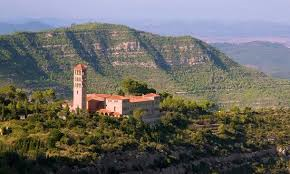
In Spanish, both “español” and “castellano” are synonyms for the same language (and we don’t capitalize languages in Spanish!) “Castellano” comes from Castile, the old medieval kingdom in northern Spain where the language originated. Once Castile and its language became dominant in the rest of Spain, people started to refer to the language as Spanish. You will hear “castellano” used in Spain in part out of respect for other official languages spoken alongside Spanish in several regions. You will also hear “castellano” used in many South American countries. In the U.S. however, “español” is the dominant term.
Myths
One of the widely spread “myths” about Spanish is that it’s an “easy” language to learn. No language is “easy”. All require time and patience to learn, as well as will and dedication to master. It is important to enjoy the process as much as possible and speak without fear, so the next time someone asks you: “¿Habla español?”, you can proudly reply: “Sí, hablo español”.
Class Descriptions
SPAN& 121: Spanish I 5 cr.
Introduces the fundamentals of vocabulary and grammar at the novice level, focusing on the development of four basic skills: Listening, speaking, reading, and writing. Emphasis is placed on active communication aimed at the development of oral and comprehension skills. Various aspects of Spanish-speaking cultures are presented. Interaction in Spanish is emphasized. This course requires real-time interactive language practice. After successful completion, students are encouraged to continue with SPAN 122. This class is not intended for heritage speakers (i.e. students who grew up speaking Spanish at home in a place where Spanish is not the medium of instruction in schools) or native speakers (i.e. students who grew up in a place where Spanish is the medium of instruction in schools). Please refer to “Spanish for Heritage Speakers” SPAN 231 if you grew up speaking Spanish without ever having had formal instruction. Recommended: This class is for students with no prior experience studying or speaking Spanish.
SPAN& 122: Spanish II 5 cr.
Continues SPAN 121 at the novice mid-level. Interaction in Spanish is emphasized. This course requires real-time interactive language practice. Various aspects of Spanish-speaking cultures are presented. After successful completion, students are encouraged to continue with SPAN 123. This class is not intended for heritage speakers (i.e. students who grew up speaking Spanish at home in a place where Spanish is not the medium of instruction in schools) or native speakers (i.e. students who grew up in a place where Spanish is the medium of instruction in schools). Please refer to “Spanish for Heritage Speakers” SPAN 231 if you grew up speaking Spanish without ever having had formal instruction. Recommended: SPAN 121 or equivalent or instructor permission
SPAN& 123: Spanish III 5 cr.
Continues SPAN& 122 at the novice high level. Interaction in Spanish is emphasized. This course requires real-time interactive language practice. Various aspects of Spanish-speaking cultures are presented. After successful completion, students are encouraged to continue with SPAN& 221. This class is not intended for heritage speakers (i.e. students who grew up speaking Spanish at home in a place where Spanish is not the medium of instruction in schools) or native speakers (i.e. students who grew up in a place where Spanish is the medium of instruction in schools). Please refer to “Spanish for Heritage Speakers” SPAN 231 if you grew up speaking Spanish without ever having had formal instruction. Recommended: SPAN 122 or equivalent or instructor permission
SPAN& 221: Spanish IV 5 cr.
First quarter of second-year, college-level Spanish. Reviews, expands, and deepens first-year grammar and vocabulary. Students practice integrating the four major language skills (listening, speaking, reading, and writing) at the intermediate level. Students further develop their cultural competency by working with authentic materials from the Spanish-speaking world. Interaction in Spanish is emphasized. This course requires real-time interactive language practice. Intermediate-level classes are not intended for heritage speakers (i.e. students who grew up speaking Spanish at home in a place where Spanish is not the medium of instruction in schools) or native speakers (i.e. students who grew up in a place where Spanish is the medium of instruction in schools). Please refer to “Spanish for Heritage Speakers” SPAN 231 if you grew up speaking Spanish without ever having had formal instruction. Recommended: SPAN& 123 or equivalent or permission of instructor
SPAN& 222: Spanish V 5 cr.
Second quarter of second-year, college-level Spanish. Continues and builds on SPAN 221. Interaction in Spanish is emphasized. This course requires real-time interactive language practice. Intermediate-level classes are not intended for heritage speakers (i.e. students who grew up speaking Spanish at home in a place where Spanish is not the medium of instruction in schools) or native speakers (i.e. students who grew up in a place where Spanish is the medium of instruction in schools). Please refer to “Spanish for Heritage Speakers” SPAN 231 if you grew up speaking Spanish without ever having had formal instruction. Recommended: SPAN 221 or equivalent or permission of instructor
SPAN& 223: Spanish VI 5 cr.
Third quarter of second-year, college-level Spanish. Continues and builds on SPAN 222. Interaction in Spanish is emphasized. This course requires real-time interactive language practice. Intermediate-level classes are not intended for heritage speakers (i.e. students who grew up speaking Spanish at home in a place where Spanish is not the medium of instruction in schools) or native speakers (i.e. students who grew up in a place where Spanish is the medium of instruction in schools). Please refer to “Spanish for Heritage Speakers” SPAN 231 if you grew up speaking Spanish without ever having had formal instruction. Recommended: SPAN 222 or equivalent or permission of instructor
Last Updated July 11, 2023