
A Clearer Purpose: Meet New Foundation Board Member James Thomas
Feb 11, 2026James Thomas recently joined the Bellevue College Foundation Board of Directors, bringing extensive experience in corporate operations and nonprofit governance.
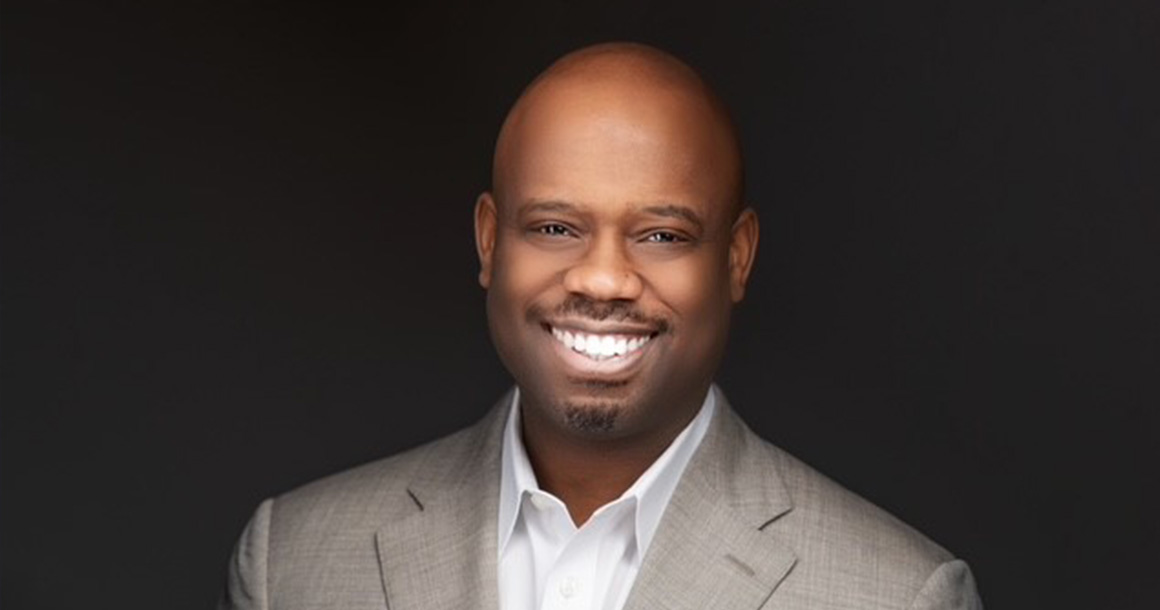
James Thomas recently joined the Bellevue College Foundation Board of Directors, bringing extensive experience in corporate operations and nonprofit governance. His professional background includes leadership roles at Alaska Airlines, Ste. Michelle Wine Estates, Starbucks, and Nordstrom.
A veteran of the Maryland National Guard, Thomas’ history of public service and board leadership for multiple local nonprofits supports the college’s mission to be a catalyst for lifelong transformation that drives social and economic progress.
Thomas characterized the decision to join the Bellevue College Foundation’s board as an exciting opportunity to help others. “Education is important if you want to create access,” he said.
A Bellevue resident, Thomas has also served on the boards of Seattle Goodwill Industries, CHOICES Education Group, Big Brothers Big Sisters of Puget Sound, and was a member of the Bellevue Rotary Group. He was chairperson of the board for City Year Seattle / King County, an organization that supports students furthest from opportunity and seeks to develop young leaders through national service.
Following his high school graduation, Thomas started at Morgan State University, which is an HBCU. He said, “Unfortunately, I couldn’t complete my degree there and support myself,” so he was forced to withdraw, but it was always in the back of his mind that it was something that he wanted to complete.
While working at Nordstrom, Thomas completed his Bachelor of Science in Business Administration from the University of Phoenix and his Master of Legal Studies from Arizona State University. He also holds a Diversity Management Certificate from Cornell University and is a Cornell Certified Diversity Professional.
“At the time, Nordstrom was one of those places where you could grow without a college degree. So, it was less about what the degree would do for me, and more about the fact that it was something that I always wanted,” Thomas said, noting that he started an online program that allowed him to travel and work while pursuing his education.
“I’d come back to my hotel, and I was writing a paper or reading for class,” he recalled. “It took me close to five years to get my undergrad. I was really excited and happy. There was a personal fulfillment in that.”
The sacrifices continued to secure his master’s.
“I decided to pursue my master’s in legal studies, because I was working in diversity and inclusion, and working in HR,” Thomas said. “I wanted to be able to think about things from the legal aspect as well as incorporate the business aspect.”
Like many working students, Thomas spent many days “fighting through” but it ended in feelings of professional accomplishment.
“I think education in today’s world is paramount for creating access and opportunity,” he said. “It even rubbed off on my mother. My mother went back to college in her 50s and got her AA degree.”
Today, Thomas is the Vice President of Organizational Equity, Inclusion, and Belonging at BECU. But his commitment to inclusion work began more than 20 years ago while working at Nordstrom.
“As you get older, purpose becomes clearer,” he said. “The me at 50 has a whole different viewpoint on life than the 25-year-old me. I’d like to think I’m wiser, and every experience has led me here.”
While Thomas has worked in several industries and held a variety of executive positions, he constantly found himself drawn back to upholding the core principles of inclusion in the workplace.
He accepted the position at BECU last year so he could continue the work, even in a time where the words surrounding DEI have become weaponized.
“DEI work has never been about creating advantages or special circumstances,” Thomas said. “It has been about drawing visibility to the fact that there has not always been equal access. There’s not a lack of talent or experience within various communities, but there has been a lack of access. It’s not a zero-sum conversation. There’s enough opportunity for all of us.”
Bringing that perspective to the Foundation, he hopes to help provide greater access on all levels from leadership to scholarships.
When Thomas isn’t working or serving his community, he is a husband and dad to 9-year-old triplet boys, which keeps him busy at home. He is also an avid tennis player, motorcyclist, and hiker.