
Inclusion and Access: Meeting Students Where They Are
Jul 28, 2026Walk through Bellevue College on any Tuesday afternoon, and you’ll see a campus community that reflects the diversity of the students it serves.
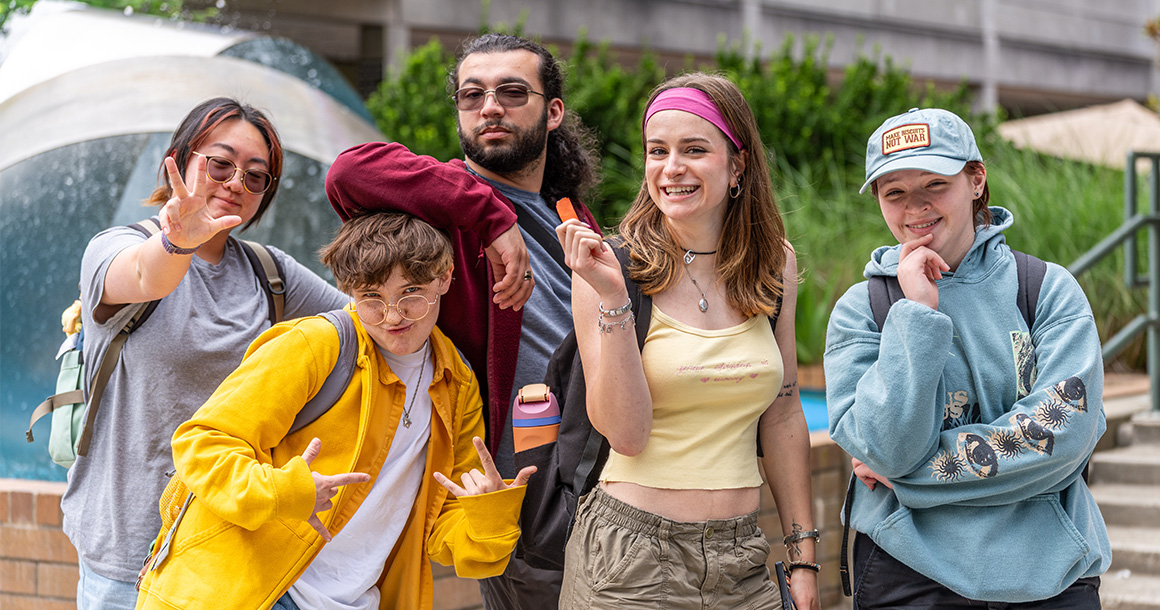
Walk through Bellevue College on any Tuesday afternoon, and you’ll see a campus community that reflects the diversity of the students it serves. Among them are students with diverse learning profiles, including students who are neurodivergent, have learning differences, are disabled, or need accommodations.
Over the past few decades, the college has built two programs in addition to the legally required Disability Resource Center to meet these students where they are — all to help them thrive.
Disability Resource Center
The Disability Resource Center is the broadest of the three; its purpose is to provide disability accommodations to any student with a disability or health condition that experiences a barrier at the college.
Colleges work under the Americans with Disabilities Act and the Rehabilitation Act, which make them responsible for access. In practice, that means extra time on exams, quiet testing rooms, dictation tools, and adjustments for students with sensory or health-related needs. The center does not change the curriculum or lower educational standards. It removes the obstacles between the student and the work
Its work differs from K-12 special education. K-12 schools work under the Individuals with Disabilities Education Act, which makes them responsible for educational success. In K-12, support is built around the student. In college, the student has to advocate for themselves.
“My goal is to work myself out of a job,” Hackett said. “The best version of this work is a campus where universal design is built in, and accommodations are no longer the workaround.”
The Disability Resource Center’s goal is not only compliance, but a shift in how the college understands disability and identity. Bellevue College has built two more programs to help further support students.
Neurodiversity Navigators
Neurodiversity Navigators is the second program. Sara Sanders Gardner runs it, and is neurodivergent themself. The program is one of the first in the country designed by someone with autism rather than by a neurotypical researcher. That detail matters. It shapes the language the program uses, which centers identity, and it shapes the structure.
“Neurodivergence is part of the diversity of this region,” Sanders Gardner said. “It is not something to be fixed. It is something to be welcomed and celebrated.”
Peer mentors are at the center of the program. They are juniors and seniors from schools like the University of Washington and Seattle Pacific University, often studying occupational therapy, social work, speech pathology, or counseling. Many already work with disability resource centers at their own schools and bring that training in. Their job is to help students problem-solve and build the strategies that work for their own unique brain. This is a series of classes – comprising 17 credits in total over 7 quarters, beginning in Summer of their first year with a College Success equivalency course.
Designed as career preparation, the classes also treat identity development as part of the work. Students name their strengths, learn the language of self-advocacy, and reflect on larger themes of executive functioning, self-advocacy, self-regulation, and social interaction. The faculty is neurodivergent, and students pay regular tuition. Some students arrive through Bellevue College’s Adult Basic Education, which helps them with academic skills. From there, some earn an associate’s degree, others a bachelor’s, including in computer science.
Geography matters too. According to Sanders Gardner, citing King County data, the Eastside has a significant concentration of neurodivergent residents, many connected to the tech industry. Companies describe the focus, pattern recognition, and persistence that neurodivergent and otherwise disabled students bring to their roles as an additive, a defining strength. Eastside employers in tech, healthcare, childcare, and public agencies are finding strengths in hires that may have been historically overlooked.
Occupational and Life Skills
The third program is Occupational and Life Skills (OLS), an associate degree for students whose needs sit in a particular middle range. Their cognitive scores are typically above the threshold for intellectual disability services, but they are not yet ready for a traditional college classroom.
The program was the first in the country to offer an associate degree to students with learning disabilities, and it remains one of only a handful of programs of its kind. It began in 2001 when a group of parents partnered with Bellevue College’s then-called Continuing Education program to form classes for their students. By 2006, the 90-credit associate degree began recruitment for the following fall quarter.
While many students come to OLS having been through K-12 special education where they had an Individual Education Program (IEP), one of the unique aspects of the OLS program is there is no upper age limit for incoming students. The program welcomes all students who fit the program’s eligibility criteria, helping them understand themselves, their disability, and their strengths, and allowing students in any phase of life to gain skills for success.
Meg Iyer, OLS associate dean, describes the program as a steady progression toward independence. The curriculum includes courses in personal finance, nutrition, citizenship, disability awareness, self-advocacy, and hands-on career exploration. Students create a career path of their own choosing, build workplace readiness skills, and once per year gather on the Microsoft campus for practice interviews. In their final year, students complete a 250+ hour internship and are well on their way to becoming self-determined individuals.
“All of our internships are catered to each student’s career pathway. No two internships are alike,” Iyer said. “In 2026, our students had a wide range of internships, from working on local film sets, assisting IT departments, and running Dungeons and Dragons campaigns to working in retail, wellness, manufacturing, and education.”
About 30% of interns receive a job offer through their internship. Within 6 months of graduation, 80% of students are either working or pursuing further education.
Access and Inclusion
The three programs are connected by something the college chooses not to do. It does not separate disability services from campus life and call the work done. The Disability Resource Center meets the legal requirements. Neurodiversity Navigators creates a space where neurodivergent students do not have to change themselves to fit in. Occupational Life Skills opens a path for students who need something different from a traditional college.
These programs reflect a broader shift in how higher education thinks about how to modernize educational practices to cater to the needs of all students. The old model treated accommodation as compliance. The new model treats inclusion as part of the educational mission, and as a strength for the campus and the community around it. Students who use accommodations are not the only ones who learn more. Their classmates learn more. The faculty become better teachers. Employers gain workers they might have missed. When difference is welcomed, the community grows.
Bellevue College is not finished. What the college offers today is three paths, depending on what a student needs. On the Eastside, those paths lead to real jobs and meaningful lives.