College Installs Permanent ‘Never Again is Now’ Mural on Campus
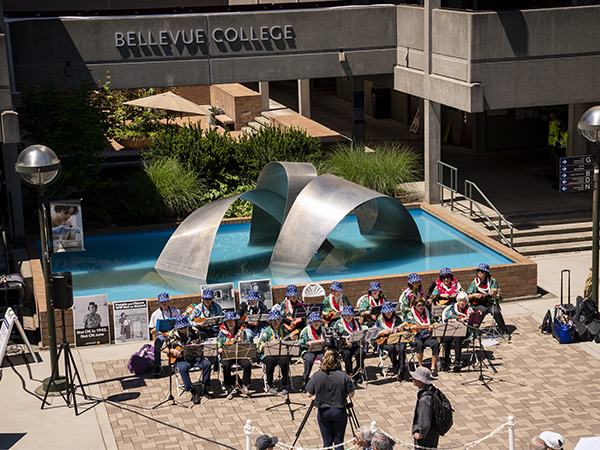
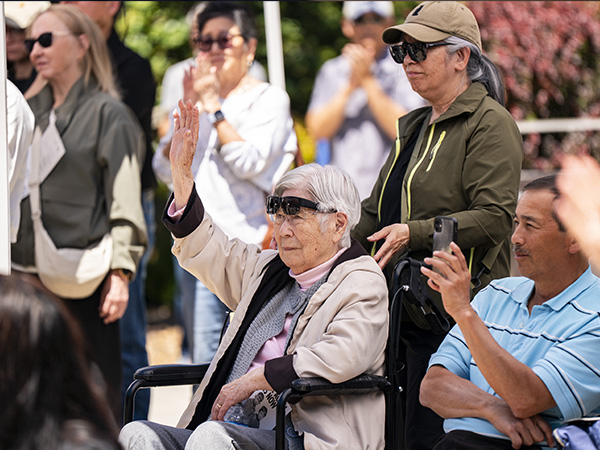
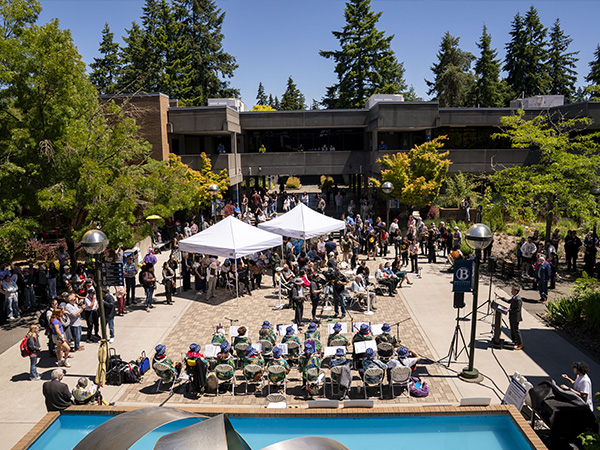
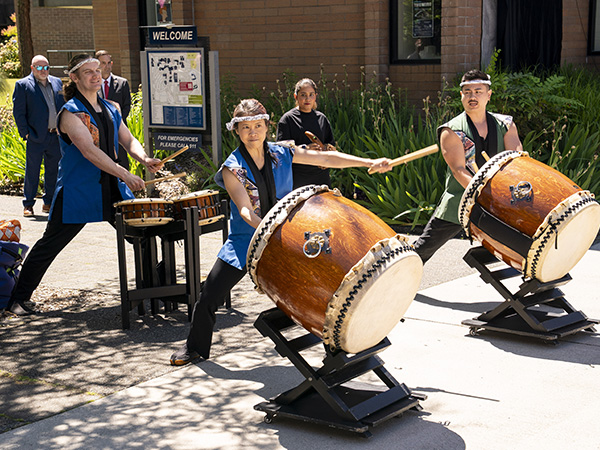
Jun 15, 2026More than 100 community members gathered to remember, grieve, celebrate, and commemorate the permanent installation of the “Never Again is Now” mural on Bellevue College’s campus.
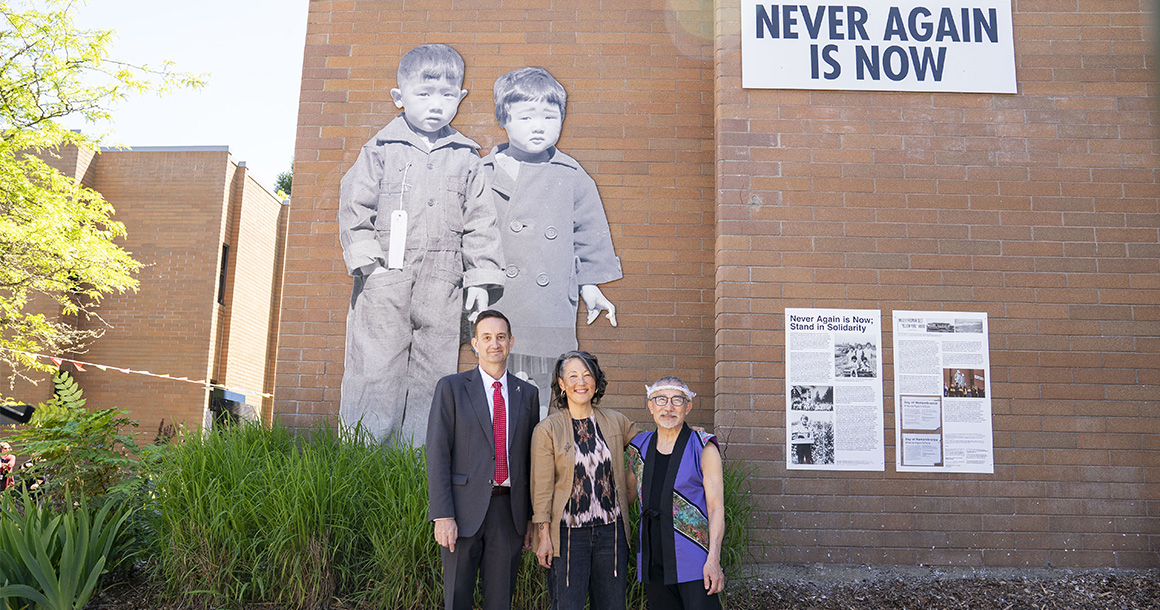
Community Gathers to Commemorate During Mural Ceremony June 11
More than 100 community members gathered to remember, grieve, celebrate, and commemorate the permanent installation of the “Never Again is Now” mural on Bellevue College’s campus.
As they eagerly awaited the unveiling of the 11-foot-tall art mural covered by a black curtain, guests reconnected, chatted, and documented an important moment in history, six years after the art’s original installation.
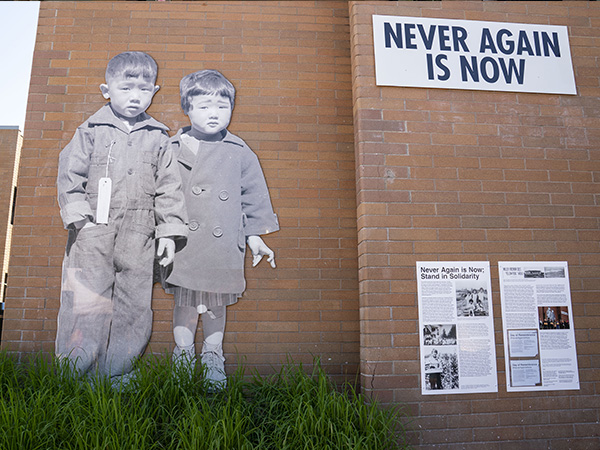
Behind the curtain was the depiction of two Japanese American children incarcerated during World War II. The words “Never Again is Now” atop, while below, two panels explain the art’s historical significance – both within the Pacific Northwest and at Bellevue College.
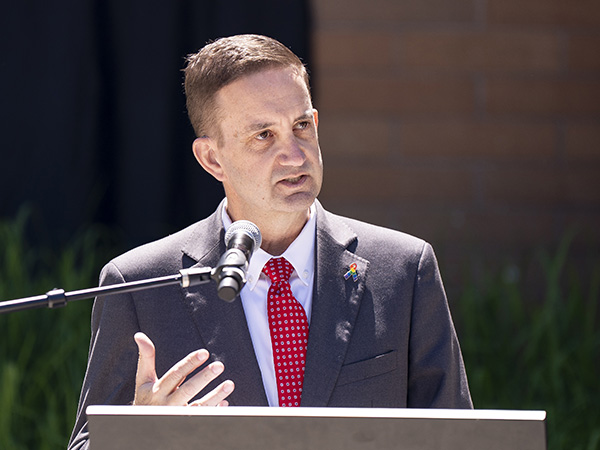
“Erin Shigaki’s mural ‘Never Again is Now’ tells the story of one of the darkest and most painful chapters in American history – the incarceration of Japanese Americans during World War II.” Bellevue College President David May said at the ceremony. “This art reminds us of what happens when fear overtakes principle. It reminds us of what happens when prejudice is given legitimacy, and it reminds us what happens when entire communities are treated as suspect, rather than on the basis of our shared humanity.”
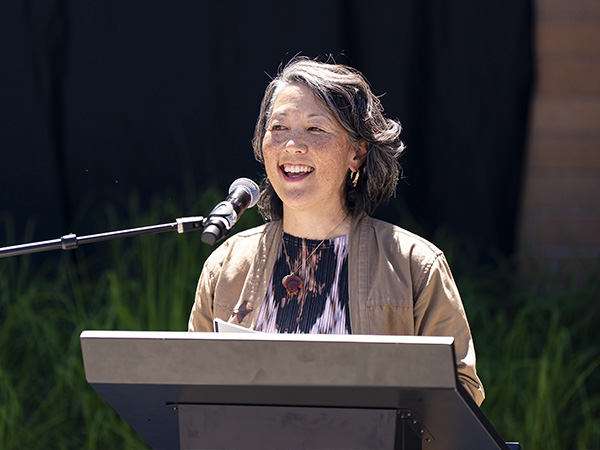
Shigaki, a Seattle artist and activist who is the descendent of Minikdoka War Relocation Center survivors, said she chose the photos of the two children, taken by Dorothea Lange, because they reminded her of her aunt and uncle who were taken to the camp, and her father who was born there.
“I saw two precious children and their scared, sad faces, and I saw their bowlish haircuts and shabby clothes. I saw their little nervous fingers, kind of twisting, and saying everything that voices couldn’t say,” Shigaki said at the ceremony. “I saw their sleeves and pant legs of the boy’s jumpsuit, rolled up and not hemmed, as if his mom was expecting this ordeal to go on for a while. And I saw children wearing prison tags. Children wearing prison tags.”
Originally displayed on Bellevue College’s campus in 2020 in what was initially intended to be a temporary mural, the “Never Again is Now” art includes historical description of the events leading up to the incarceration of over 120,000 Japanese Americans under Executive Order 9066, signed by President Franklin D. Roosevelt in the 1940s. Among those incarcerated were Bellevue-based Japanese American strawberry farmers. At the time, Eastside businessman Miller Freeman wielded considerable influence and used his publications and leadership of anti-Japanese organizations to advocate for the removal and incarceration of Japanese Americans.
The art’s new paneling includes both the mural’s original historical description that was altered by a former Bellevue College administrator in 2020 and additional historical context and photos from the 1930s and ‘40s.
“Before we continue to the unveiling of this permanent installation, I want to acknowledge something very, very plainly,” May said at the ceremony in reference to the alteration. “What happened here to this mural six years ago was wrong. Real harm was done to the artwork. Real harm was done to the history that it represents, and real harm was done to our communities. On behalf of Bellevue College today, I apologize for that harm.”
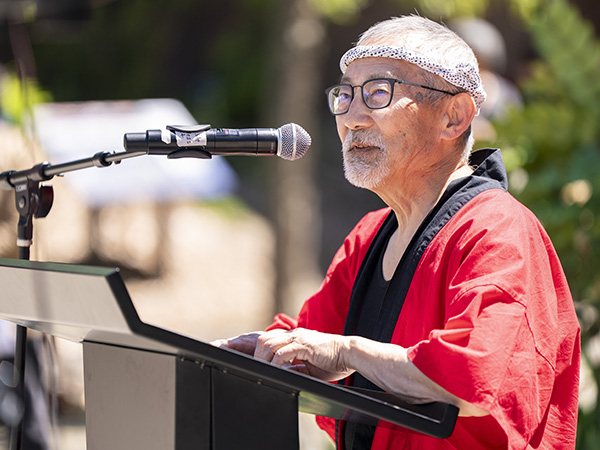
May, Shigaki, and Stan Shikuma with the Japanese American League and Tsuru for Solidarity, affirmed that history will repeat itself if we cannot acknowledge past injustices and mistakes, and, in turn, ultimately learn from and prevent them from happening again.
Shigaki pointed to a racist voicemail the college’s President’s Office received following a press conference announcing the Never Again is Now mural installation ceremony as an example that racism lives on in hearts and minds. Shikuma cited the heartbreaking immigration detention centers under the United States presidential administration today and how they’re devastating families.
“When we look at the mural, it’s two children, and the children are what point to the future,” Shikuma said. “It’s why we do what we do, because we’re concerned about the next generation. We’re concerned about our children and our grandchildren.”
Shigaki spoke of the responsibility that comes with telling Japanese American history, especially in Bellevue, and thanked Bellevue College leadership for being partners in the art’s permanent installation and the history it represents.
“Bellevue College has agreed to help us carry some of the weight of this history now,” she said.
The mural’s location on campus provides a significant opportunity for more than 22,000 students annually to continue learning about that history, as Bellevue College is the largest community and technical college in Washington state and serves a diverse student population.
“We are not placing this mural on our campus simply to commemorate and remember the past,” May said. “That’s important. But, for me, the importance of the permanence of this is more than that. The questions that this mural asks us to confront remain with us. As a college, this place exists to pursue knowledge, to challenge assumptions, and to help people understand the world that we have inherited, but also the world that we’re helping to create every day. And this mural, every time someone walks by it, asks them to do exactly that. It asks us to remember. It asks us to learn. And it asks us to remain vigilant in protecting the dignity and the humanity of every single person.”