
The Athletes who Ran, Jumped, and Soared
Jan 3, 2026Bellevue College’s 60th anniversary celebration extends beyond the classroom. It’s seen on the tracks, courts, and fields where the Bulldogs built their legacy.
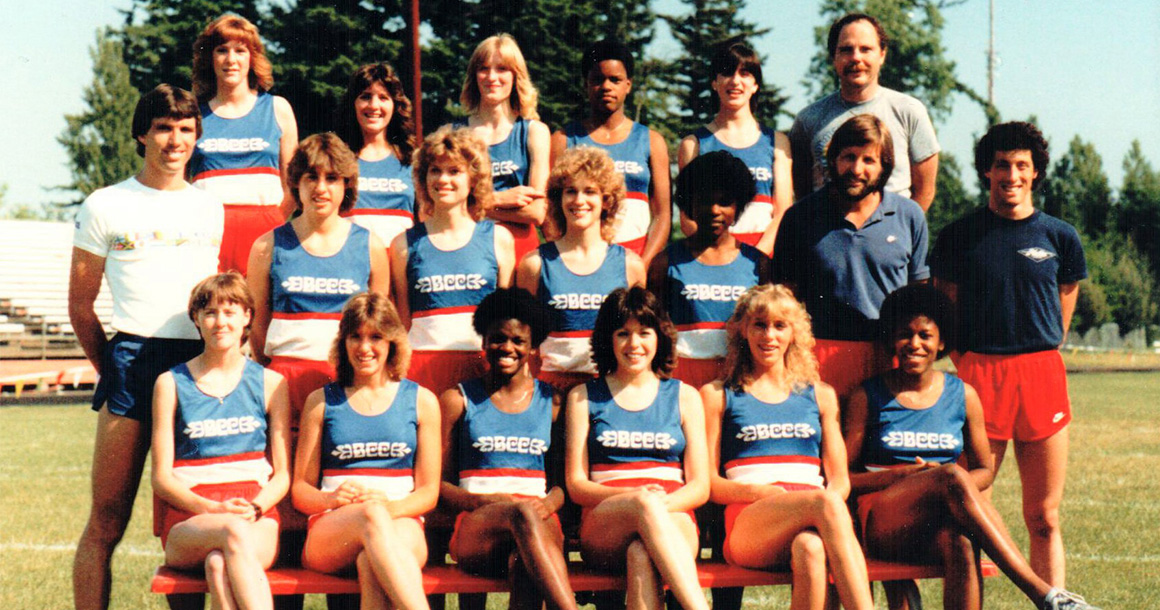
Bellevue College’s 60th anniversary celebration extends beyond the classroom. It’s seen on the tracks, courts, and fields where the Bulldogs built their legacy. From record-setting track and field stars of the 1980s to baseball players who reached the major leagues, the Bulldogs’ story is one of excellence.
Rhonda Bell: The Sprinter Who Made Time Stand Still
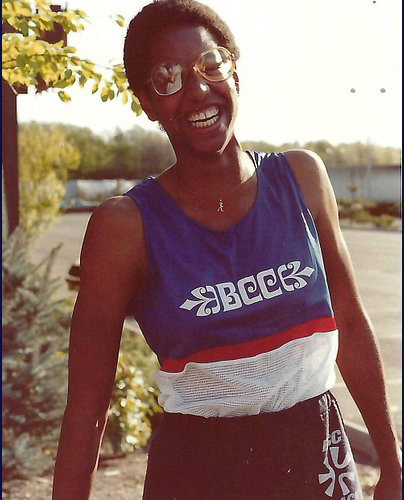
In 1980, Rhonda Bell arrived on the Northwest Athletic Conference (NWAC) scene with a flurry of record-breaking performances: gold medals in the 200m, 400m, and long jump, plus a win in the relay race where she set a meet record. Her performances scored a total of 32.5 points, which led to her selection as Bellevue’s Female Athlete of the Year.
Bell returned even stronger in 1981, lowering her own marks and recording 400m times of 53.69 and 54.21—records that remain unbroken more than four decades later. Her success continued at Oregon State University, where she became a two-time All-Pac-10 sprinter. Though she passed away in 2015, Bell’s records remain a living testament to her extraordinary talent.
“Rhonda Bell showed us what it meant to be ahead of her time,” said Jeremy Eggers, Bellevue College’s athletic director. “Her records aren’t just numbers on a page—they’re reminders of how high our athletes can set the bar.”
Lisa Kindelan: Distance and Determination
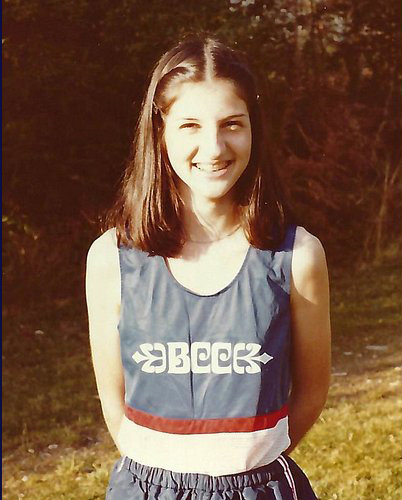
Lisa Kindelan transferred to Bellevue College in 1980 and quickly became the driving force behind Bulldog distance running. She helped lead the college to its first women’s team championship that year and then capped that with a runaway win in 1981, claiming the individual NWAC cross country title with a time that stayed at the top of the record book for 30 years. On the track, she added to her dominance by winning both the 3K (10:20) and 5K (17:54) at the 1981 NWAC championships.
After Bellevue College, Kindelan went on to earn qualifying marks for not one, but three Olympic Trials marathons—an accomplishment unmatched in NWAC history.
Teams That Redefined Dominance
If Bell and Kindelan set the bar for individual excellence, two Bellevue teams redefined collective excellence.
The 1981 women’s cross-country team turned in a performance still celebrated in NWAC lore: a near perfect score of 19 points, with runners finishing first, second, third, seventh, eighth, and ninth. It remains one of the most overwhelming team victories in the conference’s history.
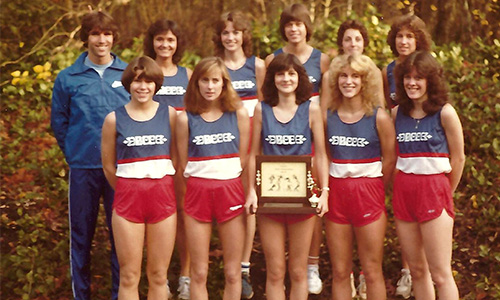
Just two years later, the 1983 women’s track-and-field team, led by coach Scott Knoblich, reached near mythic status. They won 13 of 17 events at the NWAC meet and set four records— three of which still stand. Their times in the 1600m and mile relays remain on national community college records, proof of a golden era of Bulldog dominance.
“When you look back at those teams, you realize they weren’t just winning— they were redefining what was possible at the community college level,” Eggers reflects. “That kind of legacy inspires every athlete who puts on a Bellevue jersey today.”
Coaches Who Built Champions
Behind these legendary performances stood coaches who understood that championship culture begins with leadership. Knoblich orchestrated the golden era of Bulldog track and field, guiding men’s and women’s programs to eight combined championships in the early 1980s before earning induction into Bellevue’s Athletics Hall of Fame.
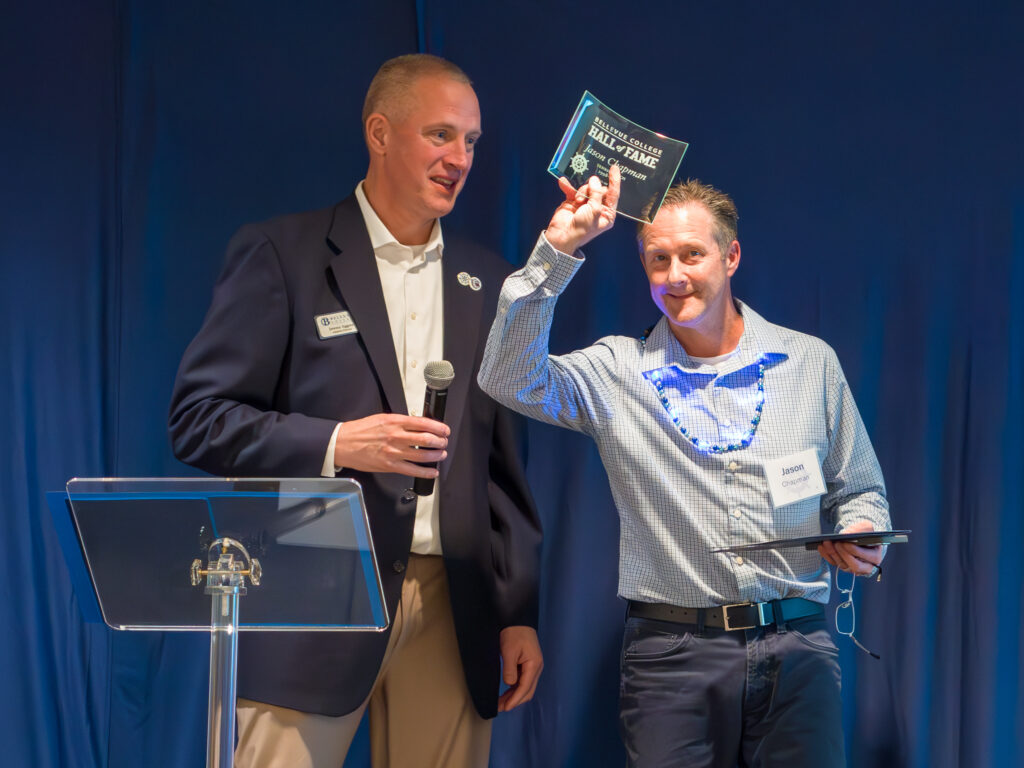
Jason Chapman’s impact spanned two decades and multiple sports, coaching tennis programs to 18 total NWAC championships. After inheriting the women’s program in 1998, he captured 14 titles before reviving men’s tennis in 2014 following a 17-year absence, adding four more championships. His sustained excellence earned multiple NWAC Coach of the Year honors and established coaching standards that continue to influence Bellevue College athletics today.
From the Diamonds to the Show
While track athletes were setting records on the oval, Bellevue’s baseball program was quietly developing its own pipeline from student athletes to professional success. Jason Ellison (1998) broke into the majors with the San Francisco Giants and later played for the Seattle Mariners. Evan Meek (2003) became an MLB All-Star reliever for the Pittsburgh Pirates. Blake Hawksworth (2002) pitched for the St. Louis Cardinals and Los Angeles Dodgers, while Adrian Sampson (2012) carved out a career with the Mariners, Rangers, and Cubs.
Each of them carried Bellevue College’s spirit to the big leagues, proving that the Bulldogs’ diamond dreams could travel all the way to the majors.
The Builders and Supporters
Championship programs require more than talent. They need vision and investment. Facilities on Bellevue College’s campus, like Courter Baseball Field and the Courter Family Athletic Pavilion, came to life thanks to the generosity of community leaders like Al Courter, whose philanthropy gave athletes a place to thrive. Longtime athletic director Bill O’Connor, who served for 14 years, oversaw sweeping upgrades from turf fields to training facilities, ensuring the Bulldogs had the tools to compete at their best.
Athletic director O’Connor complemented Courter’s philanthropic foundation with strategic leadership during his 14-year tenure from 2003 to 2017. O’Connor orchestrated sweeping facility upgrades that included renovating the softball field with fully enclosed dugouts and new fencing, installing new bleachers at the Courter Family Athletic Pavilion in 2013, and securing funding for scholarships alongside facility improvements. O’Connor earned lasting recognition when the center court at Courter Family Athletic Pavilion was named “Bill O’Connor Court” in his honor.
Together, Courter’s philanthropy and O’Connor’s vision created world-class facilities that provided the Bulldogs with the resources needed to compete at championship levels.
Legacy and Future
For the college’s athletics program, the past is more than history; it’s the cornerstone of an enduring championship culture. Over six decades, the Bulldogs have evolved from a fledgling community college program into a regional powerhouse.
“What makes Bellevue College unique is that our athletes aren’t just chasing wins; they’re building a tradition,” Eggers said. “Every championship, every record, every alum in the pros becomes part of a story that the next generation gets to carry forward.”
The numbers tell the story of sustained excellence: Bellevue College currently fields 9 men’s and women’s sports teams that have earned regional and national recognition as part of the Northwest Athletic Conference. And the college’s student-athletes consistently rank in the top five for the NWAC Presidents Cup, an award that honors academic achievement alongside athletic performance.
From Bell’s sprint records that have withstood four decades of challengers to Kindelan’s unprecedented Olympic Trials qualifications, from the near-perfect team dominance of the early 1980s to today’s generation of Bulldogs pursuing NWAC championships, each era has built upon the last.
The legacy that began with visionary coaches like Knoblich and Chapman, flourished through the philanthropy of Courter and the leadership of O’Connor. It continues under Eggers’ stewardship and remains a source of inspiration for every athlete who steps onto the track, court, or field wearing Bellevue College’s colors.
Bellevue College Team NWAC Championships
- Men’s Baseball – 5 times
- Men’s Basketball – 3 times
- Men’s Cross Country – 6 times
- Men’s Golf – 2 times
- Men’s Soccer – 10 times
- Men’s Tennis – 13 times
- Men’s Track and Field – 1 time
- Women’s Cross Country – 6 times
- Women’s Golf – 5 times
- Women’s Tennis – 15 times
- Women’s Track and Field – 7 times