
PSE Grant Helps College Lower Carbon Emissions
Apr 22, 2026Quietly humming on the roof of the Fitness Center/Gym (G Building), the heating, ventilation, and air conditioning (HVAC) units fine-tune the indoor temperature. The units are invisible to the building occupants they serve. All are new, electric, and energy-efficient — with one exception.
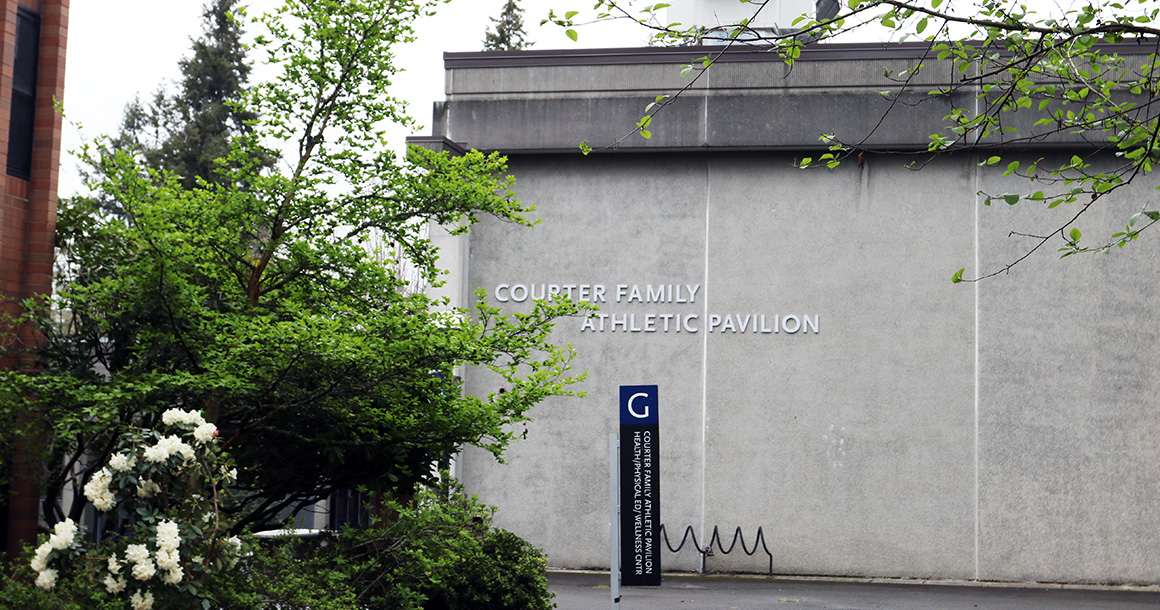
Quietly humming on the roof of the Fitness Center/Gym (G Building), the heating, ventilation, and air conditioning (HVAC) units fine-tune the indoor temperature. The units are invisible to the building occupants they serve. All are new, electric, and energy-efficient — with one exception.
Atop the building’s office tower is an HVAC relic from 1998, powered by natural gas. It emits more planet-warming carbon dioxide than all the other units combined.
Thanks to a grant from Puget Sound Energy, that unit’s time is up.
The $143,205 grant will enable Bellevue College to replace the G Building’s last remaining natural gas-powered HVAC unit with an energy-efficient electric model. Natural gas HVAC systems are the number one source of carbon emissions in campus buildings.
Once the last gas unit is replaced, the G Building’s carbon emissions will drop to less than 5% of what they were in 2023. At that time, most of the building’s HVAC systems were powered by natural gas.
“We have replaced 33 HVAC units on campus over the last four years,” said Sara Holzknecht, Bellevue College’s Director of Sustainability. “Those replacements have been a big contributor to our emissions reduction.”
Taking Aim at Natural Gas Usage
Lowering carbon emissions is critical to slowing climate change. Fossil fuels produce carbon dioxide when burned. Carbon rises into the atmosphere and traps heat, intensifying the “greenhouse effect” that warms the planet.
Carbon dioxide is one of many greenhouse gases. Its heat-trapping cousin, natural gas, takes an even bigger toll on the climate. Its primary component is methane, which traps 86 times more heat than carbon dioxide.
Puget Sound Energy wants natural gas HVAC systems to go the way of the dinosaur. It offers incentives to replace them with energy-saving electric units. That is the purpose of the Commercial & Industrial Decarbonization Grant that was awarded to Bellevue College’s Sustainability Office.
The award arrived at a critical time. By funding the HVAC upgrade, it will enable the G Building to meet new legal requirements for energy efficiency.
“We have to comply with a new state regulation called the Clean Buildings Performance Standard,” Holzknecht explained. “It requires that all commercial buildings over 20,000 square feet meet certain energy use intensity targets.”
Energy use intensity (EUI) is a benchmark of energy efficiency in a building. HVAC upgrades not only reduce EUI, but improve comfort for building occupants as well.
“People can’t focus in a classroom that’s too hot or too cold,” said Holzknecht. “With our HVAC upgrades, we can be ready for the next winter storm or heat wave.”
Meeting Goals of the Climate Action Plan
HVAC upgrades also push Bellevue College closer to meeting the goals of its Climate Action Plan, which includes becoming carbon neutral by 2050. Since the plan’s update in 2024, it has charted steps needed to raise energy efficiency. It has served as a roadmap for reducing greenhouse gas emissions.
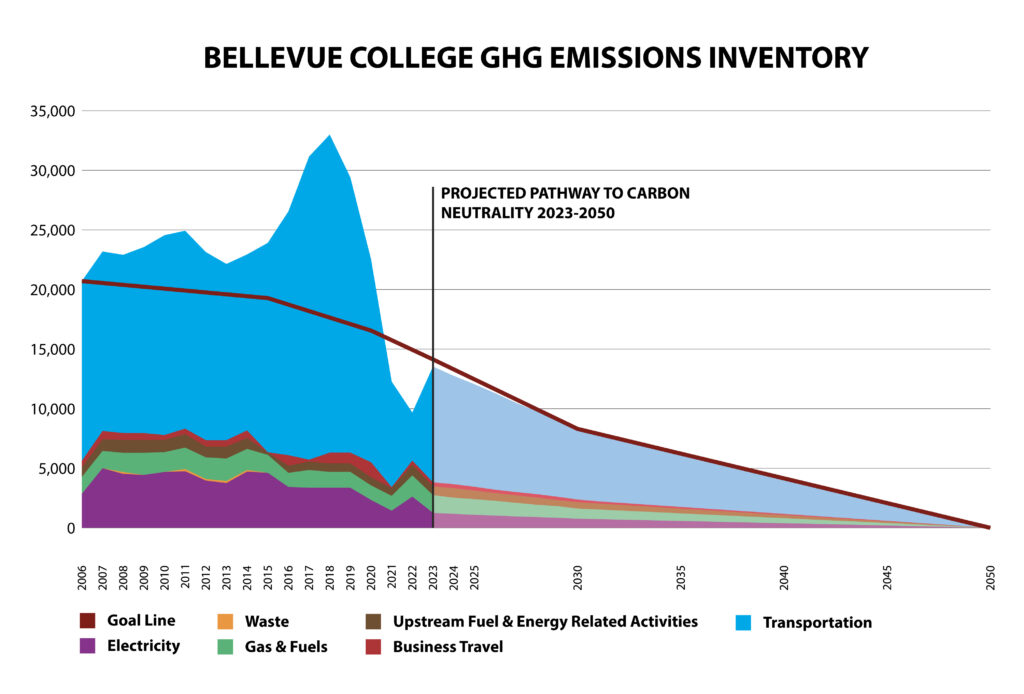
Bellevue College is making progress on several fronts.
Since 2020, the college has bought nearly all of its electricity through Green Direct, a Puget Sound Energy program. Green Direct supplies energy from local, renewable sources.
The campus has swapped LED lights for old incandescent and fluorescent lighting. LEDs use up to 90% less electricity.
The Bellevue College Foundation is funding new energy-saving software for the L and S Buildings. It activates the HVAC system only when classes or meetings are scheduled, instead of letting them run all day.
For nearly two years, the campus has been hatching a plan for an emergency backup power supply. A Solar plus Storage project is now in the final design phase. Rooftop solar arrays will feed energy into a battery the size of a shipping container. In the event of a blackout, the battery could keep lights and heat on in the K and G Buildings.

“During the 2024 bomb cyclone, we lost power for four days,” Holzknecht said. “The Solar plus Storage project gives us a way to power operations in the event of another storm. Plus, the battery could power some day-to-day operations and help lower electricity bills.”
The Climate Action Plan also targets transportation. Bellevue College recently added two electric vehicles to its fleet.
Even lawn mowers and weed whackers have transitioned to electric power. A new lithium-ion power station could charge them during a power outage, without spewing gas or diesel fumes.
Pledge of Climate Neutrality
In 2007, Bellevue College joined more than 400 institutions in signing the American College and University Presidents’ Climate Commitment. (It is now called the Climate Leadership Commitments.) All signatories pledged to reach carbon neutrality by 2050. Bellevue College codified that goal in its Climate Action Plan.
Carbon neutrality is a state of net-zero carbon emissions. To get there, the campus must vastly reduce its carbon output. Any remaining emissions must be sequestered—locked away from the atmosphere that they would otherwise damage. Carbon can be sequestered through various methods, such as planting trees.
Bellevue College is well on its way to carbon neutrality. Its blueprint for success is the Climate Action Plan.
“The Climate Action Plan connects faculty, staff, students, and the broader community,” said Holzknecht. “We can work on decarbonization projects together. It gives us a path forward for the next five years.”